
The Best Fishing Knives for 2026
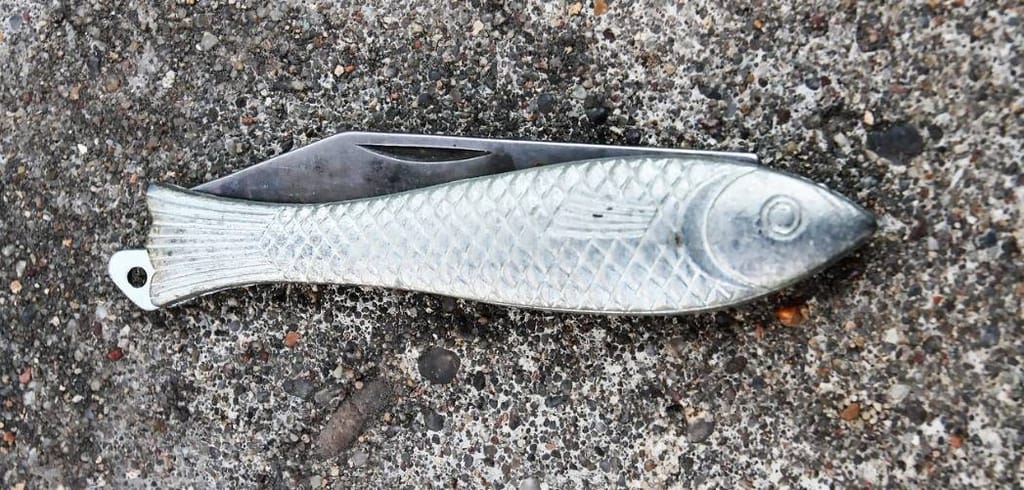
A decent fishing knife is an essential tool to keep in your tackle box as it is used for many tasks.
A quality fishing knife should be sharp, compact, and water-resistant, ideally with a stainless-steel blade.
This article will suggest 6 of the best fishing knives that tick all the required boxes needed in a top knife.
These knives cover a wide range of different fishing situations and budgets. They have been tried and tested by ourselves and have been given great reviews by many anglers across the UK.
Quick Answer
The Opinel No.7 Folding Knife is my top overall pick because it is the classic folding knife anglers have trusted for generations, sharp, simple and pocketable for line, bait and general jobs on the bank.
The table below sorts the knives by the job they do, from a pocketable folder to a dedicated filleting knife and a multi-tool.
| Best for | Knife | Best suited to | |
|---|---|---|---|
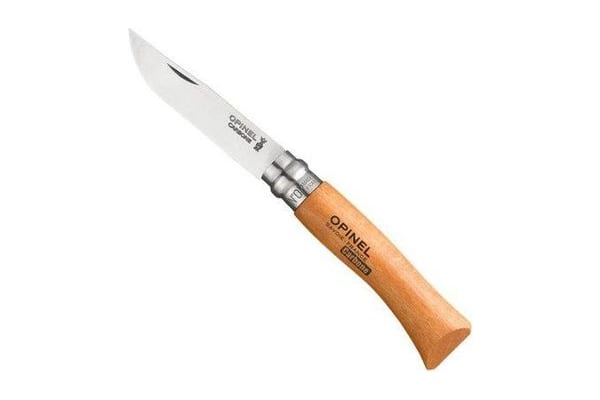 | Best Overall | Opinel No.7 Folding Knife | Anglers who want a keen, pocketable folding knife that stays UK-carry-friendly for line, bait and everyday bank jobs. |
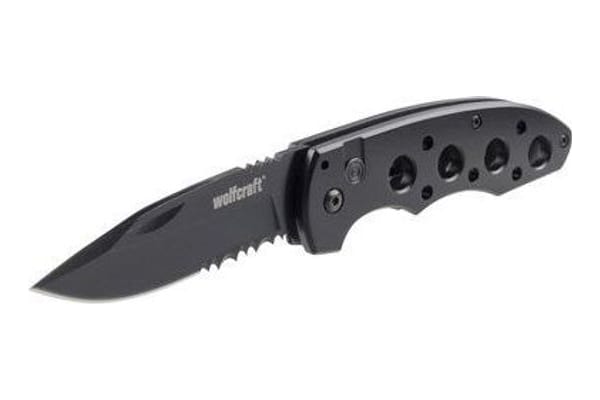 | Top Pocket Knife | Wolfcraft Serrated Folding Knife | Anglers who mostly cut rope, cord and braided line and want a locking serrated folder that grips wet. |
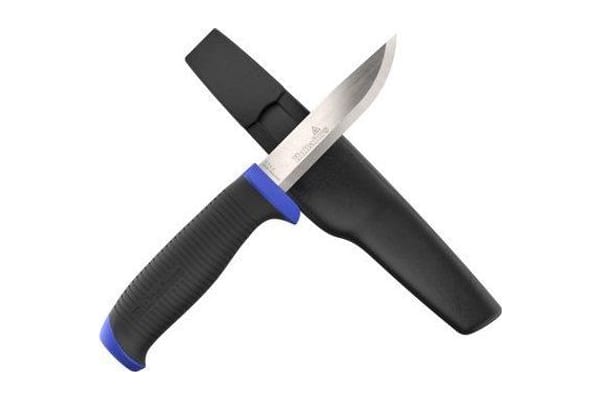 | Top All-Purpose | Hultafors Craftsman Knife | Anglers after a tough, holstered fixed knife for heavier bank cutting that a slim folder struggles with. |
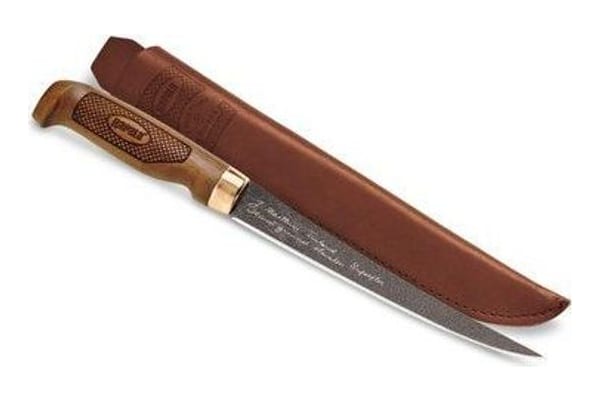 | Best for Filleting | Rapala Fish n Fillet Knife | Anglers who keep fish and want a dedicated thin, flexible blade for clean filleting with little waste. |
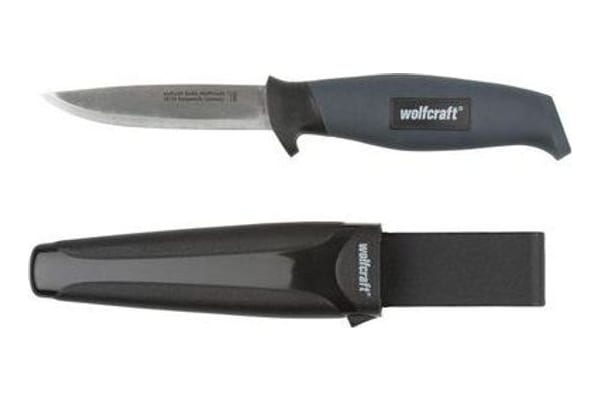 | Great Fixed Blade | Wolfcraft Fixed Blade Knife | Anglers wanting a cheap, no-fuss fixed blade to keep one sheathed in the bag and a spare elsewhere. |
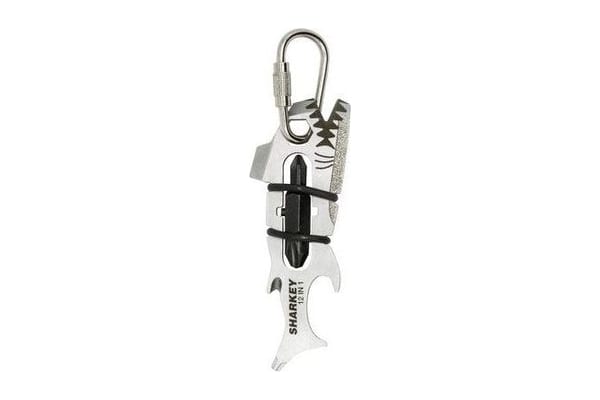 | Handy Multi-Tool | True Utility Sharkey Multi-Tool | Anglers who want a keychain multi-tool for line cutting and small fixes rather than a dedicated blade. |
The Best Fishing Knives Reviewed
Opinel No.7 Folding Knife
#1 Best Overall
A carbon steel blade under three inches is what earns the Opinel No.7 my top spot. It keeps me the right side of UK carry rules for a folding knife, and it takes an edge as keen as anything in this guide.
This is the one I reach for on the bank for the ordinary jobs: trimming line and hooklengths, opening bait, cutting cord. The beech wood handle warms up in the hand and the whole thing weighs next to nothing in a pocket.
It's a lock knife, so the blade won't fold back on my fingers mid-cut. Carbon steel also sharpens up more readily than stainless, which is why a few passes on a stone bring it back to properly keen.
The honest catch is that carbon steel will spot with rust if it's left wet, so it wants a wipe of oil and a dry after a session. It's a general folder rather than a fish-prep tool too, so for filleting I'd carry something else.
Best suited to
Anglers who want a keen, pocketable folding knife that stays UK-carry-friendly for line, bait and everyday bank jobs.
Pros
- Carbon steel takes a very keen edge
- Folding blade under three inches suits UK pocket carry
- Light beech handle sits easily in a pocket
Cons
- Carbon steel needs drying and oiling to fend off rust
- General-purpose, not built for filleting fish
Wolfcraft Serrated Folding Knife
#2 Top Pocket Knife
Where a plain edge slips on wet braid, the 75mm serrated blade on this Wolfcraft folder bites in. That makes it my pick for rope, cord and braided line that a smooth blade tends to skate over.
It's a compact folder, opening to 180mm and closing down to 103mm, so it drops into a tackle bag or pocket without fuss. A push button releases the blade and a safety lock holds it open, which stops it folding shut while I'm sawing through something tough.
The aluminium handle is textured for a non-slip hold, and that counts for a lot with wet hands on the bank. It feels solid rather than flimsy, and the German build gives me some confidence it'll last.
A serrated edge is the trade-off as much as the selling point: it tears through rope, but it's harder to touch up at home than a plain edge, and it's less tidy for fine work like paring a knot. It's a general cutter, not a fish-specific knife.
Best suited to
Anglers who mostly cut rope, cord and braided line and want a locking serrated folder that grips wet.
Pros
- Serrated edge cuts braid and rope cleanly
- Safety lock stops the blade folding mid-cut
- Non-slip aluminium grip holds in the wet
Cons
- Serrations are fiddly to resharpen at home
- Less precise than a plain edge for fine work
Hultafors Craftsman Knife
#3 Top All-Purpose
Some bank jobs ask more than a folding knife wants to give, and that's where the Hultafors Craftsman earns its slot. It's a fixed all-purpose knife with a 9.3cm German stainless blade, ground and stropped sharp, that shrugs off heavier cutting.
What sells it to me for fishing is the holster. It comes with a belt clip that snaps onto a belt or a trouser button, so the knife rides where I can grab it and won't sink to the bottom of a bag.
The blade is 2.5mm thick at 57 to 59 HRC, so it's stiff and holds an edge, and the Santoprene handle cover keeps it from turning in a wet hand. It can be reground when it finally dulls, and the corrosion protection means damp work doesn't ruin it.
It's a chunkier thing to carry than a slim folder, and being a fixed blade it needs the good-reason rule that goes with any sheath knife in public. As a workshop-grade tool it isn't delicate enough for filleting either.
Best suited to
Anglers after a tough, holstered fixed knife for heavier bank cutting that a slim folder struggles with.
Pros
- Stiff 9.3cm stainless blade handles heavy cutting
- Belt-clip holster keeps it to hand
- Non-slip Santoprene grip and a re-groundable edge
Cons
- Bulkier to carry than a slim folder
- Fixed blade needs good-reason carry in public
Rapala Fish n Fillet Knife
#4 Best for Filleting
Preparing a fish for the table is the one job a general knife can't fake, and the Rapala Fish n Fillet is built for exactly it. The 4-inch blade is ground extra thin so it flexes and follows the bones instead of tearing through them.
That flex is the whole point. It lets me run the blade along the ribcage and take clean fillets with far less waste than a stiff blade leaves behind, and the handground stainless steel arrives properly sharp.
A PTFE non-stick coating helps the fillets fall away rather than clinging to the steel, and the through-tang construction with a polished brass ferrule anchors the blade solidly into the handle. It ships in a tooled leather sheath for safe carry.
This is a specialist, not an all-rounder. That thin flexible blade would be wrong for cutting cord or general bank work, and as a fixed blade it needs its good reason for carry. If fish aren't being kept, it's more knife than the trip needs.
Best suited to
Anglers who keep fish and want a dedicated thin, flexible blade for clean filleting with little waste.
Pros
- Extra-thin flexible blade follows the bones
- PTFE coating helps fillets release
- Through-tang build with a leather sheath included
Cons
- Too specialist for general line or cord cutting
- Flexible blade is wrong for heavy tasks
Wolfcraft Fixed Blade Knife
#5 Great Fixed Blade
Buying this Wolfcraft outdoor knife puts two of them in the box, which tells its own story about where it sits: an inexpensive, honest fixed blade to keep one in the tackle bag and spare the other for the shed or the car.
Each has a 95mm stainless fixed blade, so there's no folding mechanism to seize up or wobble. The handle has a soft-grip zone and a pronounced finger guard, which keeps my hand off the edge when I'm pushing through something firm.
A hard plastic sheath with a belt clip comes with each knife, so the blade travels covered and clips within reach. Wolfcraft build it as an outdoor and DIY tool, and for rough bank jobs that plain practicality is the whole appeal.
It's a workmanlike knife rather than a refined one, so nobody's buying it for the fit and finish. As a fixed blade it carries the good-reason rule in public, and the stainless is fine but won't hold an edge like a dearer knife.
Best suited to
Anglers wanting a cheap, no-fuss fixed blade to keep one sheathed in the bag and a spare elsewhere.
Pros
- Two sheathed fixed blades in one pack
- Finger guard keeps the hand off the edge
- Simple, tough build for rough jobs
Cons
- Stainless won't hold an edge like pricier steel
- Fixed blade needs good-reason carry in public
True Utility Sharkey Multi-Tool
#6 Handy Multi-Tool
Not every job on the bank needs a proper blade, and the Sharkey is my answer to the small ones. It's a 12-in-1 keychain multi-tool that packs six screwdrivers, a pry bar, bottle opener, thread cutter, file and box opener into something barely bigger than a key.
The tool I actually use fishing is the flight-safe cutter at the top, which nips through line and thread neatly. The rest earns its keep on the odd jobs: tightening a reel-seat screw, prying a lid, opening a bottle at the end of a session.
A carabiner clip hooks it onto a keyring or a bag zip, so it's always there without eating a pocket. It's light enough that I forget it's on the keys until something needs doing.
The honest limit is right there in the category: it's a multi-tool, not a knife, so it trades a proper cutting blade for versatility. For filleting or serious cutting I'd reach for a dedicated knife and keep the Sharkey for the fiddly bits.
Best suited to
Anglers who want a keychain multi-tool for line cutting and small fixes rather than a dedicated blade.
Pros
- Twelve tools in a keychain-sized body
- Flight-safe cutter nips line and thread
- Carabiner clip keeps it always to hand
Cons
- No proper knife blade for filleting
- Small tools suit light jobs only
Fishing Knife FAQs
Still choosing a knife?
These are the questions worth settling before buying.
Do I need a knife for fishing?
A knife earns its place fast: cutting line and leader, freeing a deep hook, opening bait packets, and preparing a fish for the table. A folding pocket knife or a multi-tool covers most of it, while a dedicated filleting knife is worth carrying if fish are being kept.
Is it legal to carry a fishing knife in the UK?
UK law lets anyone carry a folding, non-locking blade under three inches without needing a reason. A locking or fixed blade needs good reason to carry in public, and going fishing is a genuine good reason. The sensible approach is to carry it only for the trip and keep it in the tackle bag, not on the street.
What are the different types of fishing knife?
A folding or pocket knife handles line and general jobs and travels easily. A filleting knife has a long, thin, flexible blade for preparing fish. A fixed-blade knife with a sheath is tougher for heavier work, and a multi-tool trades the perfect blade for pliers, scissors and screwdrivers in one.
How do I keep a fishing knife sharp and rust-free?
Rinse and dry the blade after every trip, especially in saltwater, and a wipe of oil keeps rust off a carbon steel blade like the Opinel. Touch the edge up on a sharpening stone or steel before it goes dull, and store the knife in its sheath rather than loose in a wet bag.
Final Thoughts
The best fishing knives need to be sharp, water-resistant, and compact enough to fit in your tackle box or pocket.
There are some amazing fishing knives on the market today, and we hope that this article has helped you find the perfect knife to suit your fishing circumstances perfectly.
Thanks for reading
Tight lines!
Best Fishing Multi-tool
Pros
- Well-built and robust
- Comes with many tools anglers will find handy
- The led torch can be used with the pliers
Cons
- When new it can be tricky to get the tools out. (It becomes easier though with more use)
Related Articles...

Best Fishing Tackle Boxes
In this article, we are looking at the best fishing tackle boxes available in the UK right now.
So, if you enjoy carp or match fishing, you’ll find a way of organising your kit below. Or if you’re after pike, game fish, or enjoy sea fishing, we have you covered as well.

Best Fishing Seat Boxes
This article will explain what features to look out for in the best fishing seat boxes as well providing insight on the different types and when best to use them.

Carp Fishing For Beginners
This handy carp fishing for beginners guide is based on years of experience of both succeeding and failing! We’ll take you through everything you need to know from the absolute basics to some more advanced tips and advice to get more carp on the bank.