
The Best Fishing Pole Brands In The UK (Guide On Top Quality, Reliable Fishing Poles) 2026
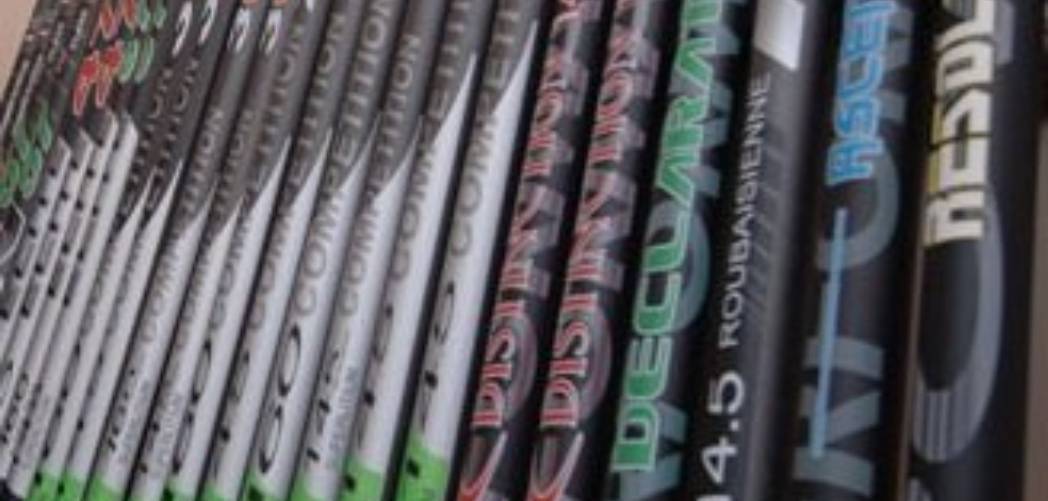
It is no secret that fishing poles are very popular with a lot of anglers, and, as such, the choice of which pole to buy can be quite difficult.
When you are looking at different brands of fishing poles, how do you know which one is best? and how do you know what brand of fishing pole to purchase?
This article details 7 of the best fishing pole brands that manufacture some of the top fishing poles on the market today.
We also go into what makes a top-quality fishing pole as well as advising on some of the best poles made by the best brands.
Quick Answer
The Daiwa is my top overall brand because they have been building poles at the sharp end for decades and their flagship still sets the benchmark other makers answer to.
For better value, my starting point would be Guru. The table below matches each brand to the angler it suits, and links the pole that best represents what they do.
| Best for | Brand | Best suited to | |
|---|---|---|---|
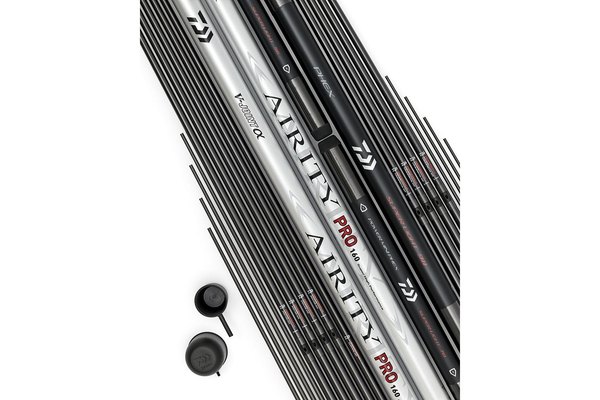 | Best Overall Brand | Daiwa | Anglers who want the maker that gets to the new idea first, and who will pay whatever the top of the range asks to have it. |
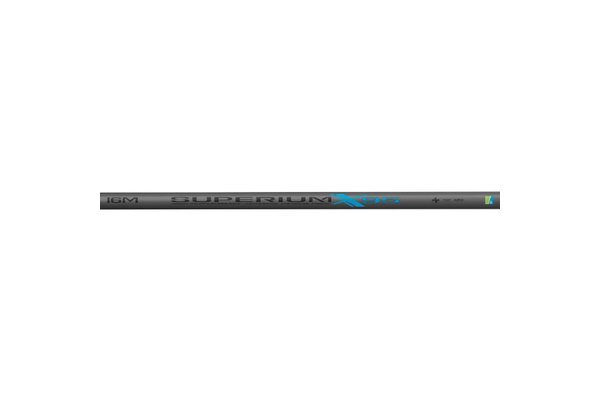 | Best for Match Anglers | Preston | Anglers who fish matches and want a maker whose entire world is the match scene, from the seat box upwards. |
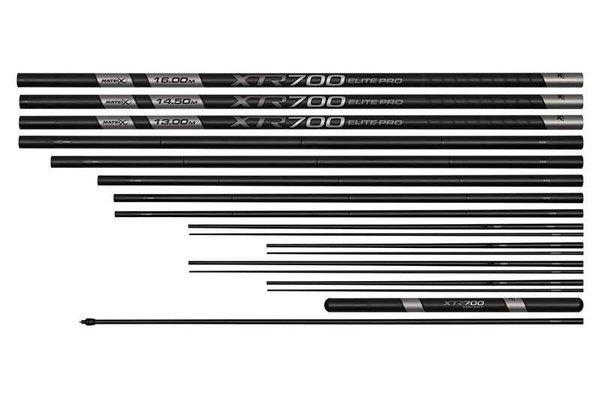 | Best for Commercials | Matrix | Anglers whose fishing is commercial carp and F1s week in, week out, and who want a pole built for that and little else. |
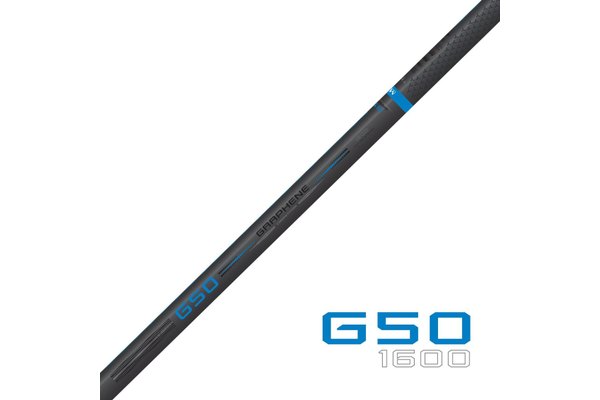 | Best for Interchangeability | MAP | Anglers building a pole setup over years who want the next pole to keep fitting the kits already in the holdall. |
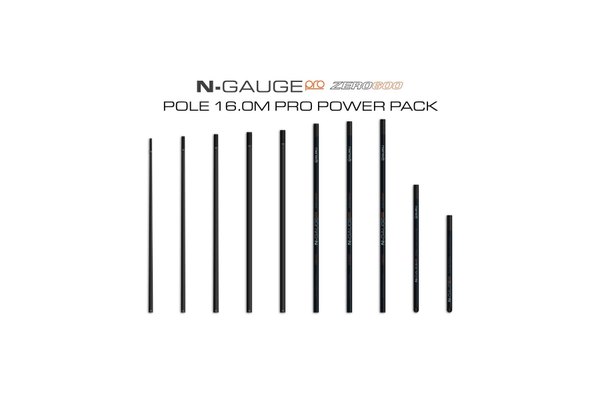 | Best Value Flagship | Guru | Anglers who want a genuine 16m flagship without the outlay the older names at this end of the market demand. |
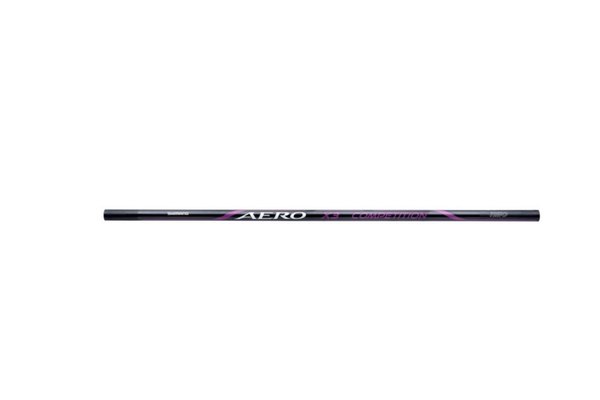 | Best Way In | Shimano | Anglers who want a global name at its most reachable, with a range above it worth growing into. |
Why buy a branded fishing pole?
As stated in the introduction, with the best brands comes the best quality. With a fishing pole, quality means the best materials in the right dimensions that makes fishing with it an easy and pleasurable experience.
When a brand is established, it knows what the consumer wants. An established brand also has served thousands upon thousands of customers and has a multitude of reviews and feedback to draw upon.
The best brands are often those that act on feedback to improve and ultimately end up with a product that has a reputation of quality with many good reviews and lots of positive feedback.
So with a branded fishing pole, you know you will get a product that has gone through a rigorous process to ensure its quality is top-notch.
Finally, the best fishing pole brands will produce a variety of products to cater to all angler's needs.
For example, the best brands will not only make the best ultimate fishing pole but they will also have a great product if you needed a budget pole or needed a pole for a beginner or even for a specific circumstance such as a pole for fishing in the margins.
What makes a top-quality fishing pole?
There are 3 important considerations when deciding what makes the best quality fishing poles. These are:
- Weight
- Strength
- Ease of Use
Weight
One of the main reasons that anglers use a pole over a fishing rod is the fact that you can present very fine rigs a long distance out.
Poles usually go up to 16 metres in length which can be very handy if you are fishing to a feature up to this range.
To have 16 metres of pole in your hand for a prolonged period of time could become very uncomfortable if the pole was particularly heavy.
For this reason, the poles from the best brands are made from high-grade carbon to make them super lightweight.

Strength
You would be forgiven for thinking that a pole that is extremely lightweight would mean it's flimsy and weak. With the best poles though, this isn't the case.
In fact, the materials used in the quality poles are not just light, they are super strong as well.
This is obviously an important factor for investing in a pole in the first place as they are not the cheapest item of tackle on the market. If they were to break easily, it would ultimately lead to a lot of wasted cash.
Secondly, you need the strength to be able to play fish effectively and steer them away from dangerous snags and vegetation. A good, strong pole will definitely lead to more fish landed safely.

Ease of Use
The main aspect in the enjoyment of fishing is the battle between man and fish. At no point has anyone mentioned that they particularly enjoyed the battle between man and pole!
When fishing you really need equipment that can be used efficiently and easily without any mishaps.
A quality pole will always be easy to use and be made in a way to tick this important box. For example, shipping the pole back and taking off sections as well as adding them on is made easier when the joints are made well.
Also, the outer coat of a quality fishing pole is often one that is comfortable to grip and hold, yet easy to slide between your hands when shipping.
Before purchasing a pole we recommend you spend time handling and testing these important requirements.
The Best Fishing Pole Brands Reviewed
Daiwa
#1 Best Overall Brand
Daiwa started out in the 1950s as a company that made nothing but fishing reels, which makes it faintly absurd that they top a guide about poles. That journey is the argument for them, though. They came to poles late and still ended up setting the benchmark the rest of the trade answers to.
What defines Daiwa for me is that they tend to arrive at a design before anyone else does, and the market follows a season or two behind. They have a presence in Japan, the UK, the Far East and, more recently, Scandinavia, so a Daiwa idea gets tested against a lot of very different fishing before it ever reaches a British commercial. It's why so many anglers treat them as the default for reels, rods and poles alike rather than shopping around.
The Airity Pro is where that shows. Daiwa build it around Super MSG nanoplus technology and a V-Joint Alpha, and they aim it squarely at commercial fisheries and bigger carp. It's 15.2m of pole, reaching 16m once the Phex goes on, with a recommended max elastic of 10, or 20 through the power kits. The More Power package carries four professional commercial top kits and four professional power top kits, all cut and fitted with PTFE bushes. Years back I called Daiwa's Air Z Pro the best pole I had ever used, and its V-Joint was a big part of why. That pole is gone now, the Airity holds the slot, and V-Joint Alpha is the thread running between them.
The catch is blunt. It's the dearest pole in this guide by a distance, and not by a little. Plenty of anglers fish beautifully with a fraction of it, and the Airity is a purchase that buys the last few percent of performance. That last few percent has never come cheap, and it never will.
Best suited to
Anglers who want the maker that gets to the new idea first, and who will pay whatever the top of the range asks to have it.
Pros
- Decades of reaching new pole designs first
- Kits arrive cut and fitted with PTFE bushes
- Built around commercial fisheries and bigger carp
Cons
- The dearest pole in this guide by a distance
- Measures 15.2m until the Phex extension goes on
Preston
#2 Best for Match Anglers
Walk a match circuit for a season and Preston Innovations is the name on half the bank. The brand was founded by David Preston and comes out of Telford, and it has never really strayed from the match and leisure side of the sport, which is precisely why it takes this slot.
Their reputation was built on seat boxes and poles, and that's a fair reflection of the brand: those are the two bits of kit a match angler genuinely lives on, and Preston have kept iterating on both while their presence on the match scene has kept growing. The business has since been sold to Zebco brands in the US, though it carries on operating in Europe much as it did before, and nothing about the poles has changed for the worse from where I sit.
The Superium X95 is the pole they point at, and they aren't shy about it: Preston call it the flagship of the range and reckon it the best pole they have ever produced. It's created using the finest Japanese carbon technology, with Dura wrap technology and reinforcement in the places a pole takes its punishment. The detail that gives away who it's built for is the top kits. The depth markers now read in one-inch increments for fine rig tuning, and the kits are identical right across the Superium X models, so a kit off the Margin fits the flagship. The package is enormous: a 16m pole with mini extension, a match kit in the pole, two more match kits, five F1 kits, five carp kits, two F1 short greys, a kup kit, a short three and a Hardcase Pole Safe.
The honest catch is that it's a lot of pole for anyone not fishing matches. All those kits earn their keep when a five-hour peg demands three different attacks. On a lazy Sunday session, most of them never leave the holdall.
Best suited to
Anglers who fish matches and want a maker whose entire world is the match scene, from the seat box upwards.
Pros
- Match and leisure focus going right back to the founder
- Top kits identical across every Superium X model
- One-inch depth markers suit fine rig tuning
Cons
- The kit package is overkill outside match fishing
- Shared kits make the cheaper Superiums tempting
Matrix
#3 Best for Commercials
Here's the bit that catches anglers out: Matrix is Fox. The brand sits as a subsidiary of the whole Fox International business, a name most people file under carp gear rather than match tackle, and yet Matrix has become one of the most convincing pole makers on a commercial.
Fox was founded in 1967 and rapidly outgrew its start-out premises in Essex. Today the group manufactures thousands of tackle products and operates globally, and the Matrix part of it is the bit pointed squarely at match and commercial fishing. It has become popular quickly, and rightly so, because the products feel properly thought out rather than simply badged. Whatever anglers make of the Fox carp side, that reputation for quality carried straight across.
The XTR700 Elite Pro is the current evidence. Matrix manufacture it using the highest grades of Japanese carbon fibre and their new X-Graphene resin, and every pole in the XTR range is fully interchangeable. It runs to 16m including the mini extension, has ten sections and closes down to 1800mm. There's MST layering technology, a Glide tape finish and SLG joints, printed distance markers on sections three to seven, and PTFE bushes with Revolve side pullers fitted to the kits. The package leans hard into commercial work: four Pro match kits, four Pro power kits, four short match kits and four short power kits, plus a twist lock cupping kit, all in a Duralite case.
Two honest notes. The weight fields on the listing are left unfilled, so there's no published weight to judge it on, and at this level I'd want to feel the thing at full length before committing. And that stack of short kits says plainly what the pole is for. It's a commercial tool, and an angler who mostly fishes rivers and natural venues is paying for kits that will rarely get shipped out.
Best suited to
Anglers whose fishing is commercial carp and F1s week in, week out, and who want a pole built for that and little else.
Pros
- Fox International build quality behind a match brand
- Matrix claim X-Graphene resin adds stiffness, not weight
- Kit package built around commercial carp and F1s
Cons
- No published weight on the listing to judge it on
- Short-kit heavy package suits natural venues less
MAP
#4 Best for Interchangeability
Most pole decisions get made once and regretted at the second purchase, when a new pole quietly means a whole new set of top kits as well. MAP are the brand that has taken that problem most seriously, and that is why they hold this slot.
MAP is short for Match Angling Products, a UK brand built around match fishing and not much else. They state that they design every product in-house, and their TKS poles have earned their press on simplicity and versatility rather than novelty. The range was deliberately built so that top kits carry across it, which is the kind of forward thinking that pays out years after the money has gone.
The TKS G50 is the proof, and it's an unusually literal one. MAP built it on the same mandrel as the TKS 601, 701, 801 and 901, so it offers full interchangeability with those models: an angler already holding a TKS from that group keeps every kit they own. As with the rest of the G Series there's Graphene resin impregnated into the carbon, which MAP credit for extra wall strength, plus an anti-friction finish for shipping and a section alignment system. Every top kit carries a unique depth marker print, an extra-long PTFE bush fitted as standard and a side roller puller. The package runs to a fitted match kit and three more, three power kits, three short shallow kits, a rigid cupping kit with cups, a reinforced mini extension and a deluxe holdall.
The catch is that the interchangeability has edges. It's the 601, 701, 801 and 901 mandrel specifically, so anglers on another TKS model, or arriving from a different brand entirely, collect none of that benefit. The promise only really pays out for someone already inside MAP's system. Buying in from scratch, it's simply another very good pole.
Best suited to
Anglers building a pole setup over years who want the next pole to keep fitting the kits already in the holdall.
Pros
- Shares its mandrel with the TKS 601, 701, 801 and 901
- Top kits bushed with extra-long PTFE as standard
- Every product designed in-house by a match specialist
Cons
- Interchangeability covers only the listed TKS models
- Nothing carries over for anglers switching brands
Guru
#5 Best Value Flagship
Guru are the baby of this guide by a long way. The brand arrived in 2009, set up as a sister to Korda to do for match fishing what Korda had done for carp, and it made its name at the small end of the tackle box: hooks, feeders, floats, ready-tied rigs, bait bands. Poles came later, and that late start is why they take the value slot.
What carried over from the terminal tackle years is a habit of working out what an angler actually needs and then making it reachable. The N-Gauge Pro range is three poles covering different situations, and each one carries the top-end features Guru learned building their flagship Aventus models. What gives it credibility is that N-Gauge Pro is fully interchangeable with Aventus and built on the same mandrel, so this isn't a lesser design wearing a borrowed badge.
The 16m Pro Power Pack is built on the ZERO600, an all-rounder Guru rate for commercial and natural venues alike, using their ZERO600 Tensile Carbon Construction and an Ultra-Fast Taper, with a Super Glide Matt Paint Finish and Friction Free Matt Tape Finish for smooth shipping. The bit I rate most is their insistence on full-length poles. True Extensions take it to 13m, 14.3m and 16m, and Guru make a point that where a venue enforces a pole limit, anglers are fishing the true distance rather than a hopeful approximation of it. The pack brings a 4.7mm Match Power kit in the pole, three more, three 5.8mm carp power kits, a cupping kit, a short number three and a six-tube holdall.
The honest catch is history, not the pole. Guru have been building poles for a fraction of the time Daiwa or Preston have, and a badge with decades behind it counts for something when a pole gets sold on. The compromise sits in the name on the butt section rather than in the carbon.
Best suited to
Anglers who want a genuine 16m flagship without the outlay the older names at this end of the market demand.
Pros
- Fully interchangeable with the flagship Aventus range
- True Extensions give honest 13m, 14.3m and 16m
- A real 16m flagship for far less outlay
Cons
- Far less pole-building history than its rivals here
- A younger badge tends to tell when selling on
Shimano
#6 Best Way In
Every other brand in this guide asks an angler to turn up with the money already made. Shimano is the one that leaves a door open, and that is the slot they earn here.
They need little introduction: Shimano are one of the genuinely global names in tackle, and the Aero line is the match end of that business. What matters to a pole buyer is what sits above the way in. Shimano run the Aero poles up through the X5, X7 and Pro models, so a first pole from them is the bottom of a ladder rather than a dead end, not a brand with one good pole and nothing behind it.
The Aero X3 is the way onto that ladder. Shimano designed it for all-round versatility and built it to handle carp, F1s and silvers across both natural and man-made venues. It's made from high quality Japanese carbon and benefits directly from the development programme behind the Aero Pro. Aero Joint is a reinforcement Shimano say improves longevity, the Aero Alignment System is there to maximise stiffness, and the Ultra Sound Finish takes care of smooth shipping. Fitted with the Super Power Kit, Shimano reckon it copes with large elastics and hard-fighting fish even at full length. Swap in the lighter Super Match Kit and it leans towards silverfish at 13m and under. Reinforcing bands are built into the top kits, so a preferred puller kit can go on.
Two honest points, and the first is unmissable. This is a 14.5m package, not 16m like everything else here. On a water with the limit set at 16m, that is a real disadvantage and the clearest marker of where the X3 sits. The second is that the larger sections don't interchange with the X5, X7 or Pro, so climbing the Aero range later means buying a pole rather than upgrading one. Only the top kits carry across.
Best suited to
Anglers who want a global name at its most reachable, with a range above it worth growing into.
Pros
- A global tackle name at its most reachable
- Top kits carry across to the dearer Aero poles
- Super Power or Super Match kits change its character
Cons
- At 14.5m it falls short of a 16m pole limit
- Larger sections do not fit the X5, X7 or Pro
Fishing Pole Brand FAQs
Still weighing up which maker to put the money with?
These are the questions worth settling first.
Does the brand of fishing pole actually matter?
It matters less for the carbon than for everything surrounding it. Any established maker can turn out a stiff 16m pole these days. What a brand really buys is the depth of the range behind it, spares that are still being made in five years, and top kits that fit when a second pole joins the holdall. That is why the six here earn their places: not one good pole each, but a system that keeps working long after the purchase.
Are pole top kits interchangeable between brands?
No, and that assumption is an expensive one to make. Top kits are cut to a maker's own mandrel, so a Preston kit will not fit a Matrix pole. Inside a brand it is a different story: Preston's Superium X kits are identical across every model in the range, the MAP TKS G50 shares its mandrel with the TKS 601, 701, 801 and 901, and Guru's N-Gauge Pro interchanges with the Aventus. Even within one brand it is not guaranteed, though. Shimano's Aero top kits cross between models while the larger sections do not.
What does a flagship pole buy over a mid-range one?
Stiffness at full length, mostly, and the weight that comes with holding it there. A flagship keeps its shape at 16m where a mid-range pole starts to nod, which makes rigs easier to control and fish easier to steer away from trouble. The rest of the money goes on the kit package: a top pole arrives with enough bushed kits to cover match, power, F1 and short work, where a cheaper pole needs those bought one at a time. Whether that last few percent of rigidity is worth the jump depends largely on whether an angler is fishing for money.
Which fishing pole brand is best for a beginner?
Shimano, of the six here, and the Aero X3 is the reason. It is the most reachable way into a serious range, and its top kits carry over to the dearer Aero poles later on. The honest advice, though, is that a beginner is better served by avoiding any brand's flagship: a shorter pole handled properly beats 16m of expensive carbon that never gets shipped out past the third section. Brand tends to matter far more on the second pole than the first.
Final Thoughts
In summary, the best fishing pole brands are those that offer quality, versatility and diversity in their product range. Alongside this, the best brands ensure that feedback from their consultants and their customers are all taken into consideration every time they produce a new pole.
Hopefully this article has provided some guidance on what the best fishing pole brands are currently operating in the market today. We also hope we have given you some thoughts on what pole to purchase if you are looking for one.
Many thanks for reading.
Related Articles...

5 Best fishing poles under £500
In this article we are going to have a quick run through what pole fishing is all about and give you some suggestions on the best fishing poles under £500 today.

Best Poles for Margin Fishing
This article aims to provide you with a complete guide to the best poles for margin fishing and should hopefully help you choose the right margin pole for your specific circumstances.

6 Best Fishing Poles for Beginners
This article seeks to provide some clarity on the basics of a fishing pole and the different types available in order to help decide on the best fishing poles for beginners.