
The Best Cameras For Fishing Self Takes for 2026
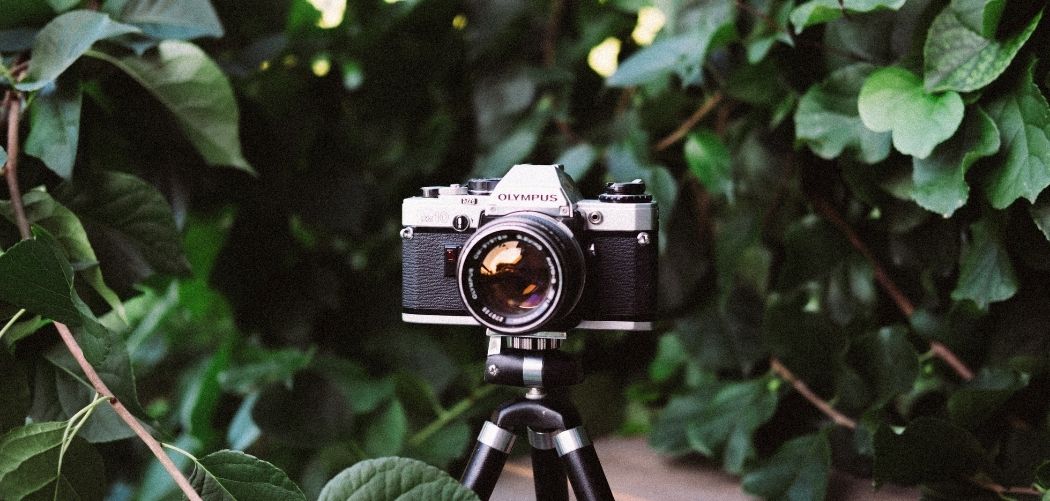
Selfies, regardless of your age you can’t fail to be aware of what they are.
Today’s society is obsessed with social media and technology, and as the saying goes, if you cant beat them, join them.
If you are a bit of technophobe, don’t worry we are going to take a look at all of the good things that go into making the best cameras for fishing self takes and then give a few choice suggestions to help you decide.
Quick Answer
The GoPro HERO13 Black is my top pick because it is waterproof without a case, wide enough to fit me and the fish in frame, and I can start it from my phone with both hands under a carp.
The table below runs from a premium action camera down to a budget one, and includes the tripod and bank stick mount that actually make a self take possible.
| Best for | Camera | Best suited to | |
|---|---|---|---|
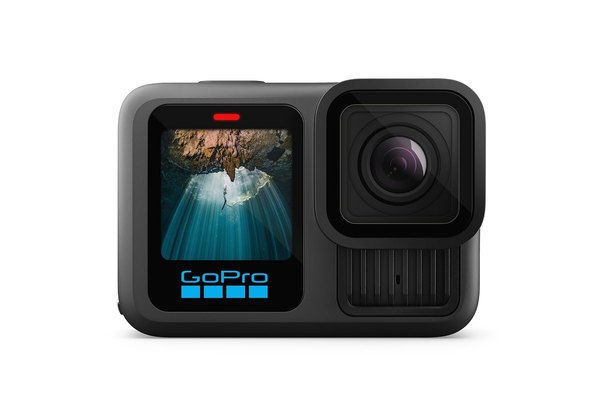 | Best Overall | GoPro HERO13 Black | The angler who shoots in all weathers and wants one camera that handles rain, mud and a dunking without a housing anywhere near it. |
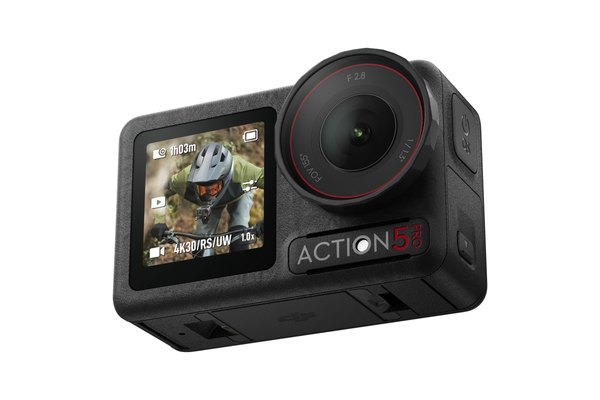 | Best Premium | DJI Osmo Action 5 Pro | Serious self-takers who want to see their own framing before the fish ever leaves the water, and who film as much as they photograph. |
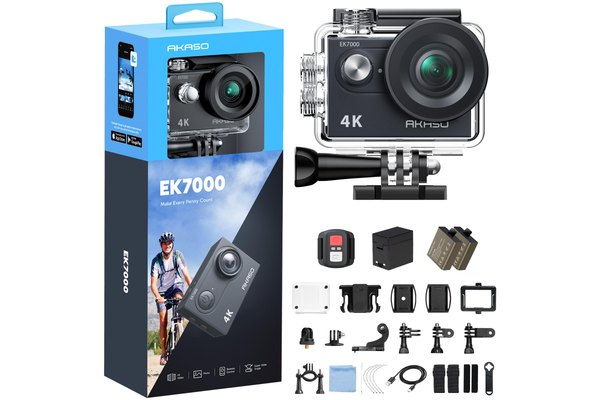 | Best Budget | AKASO EK7000 4K Action Camera | Newcomers to self takes who want a physical remote in hand and a full mount kit in the box on day one. |
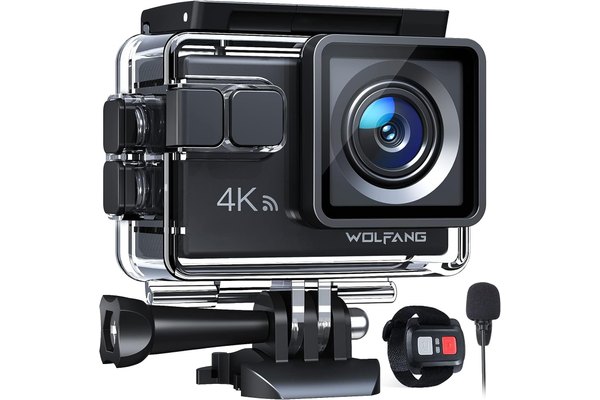 | Best Value | WOLFANG GA100 4K Action Camera | Anglers after a complete package in one box: camera, remote, mounts and spare batteries, ready to shoot on the very first session. |
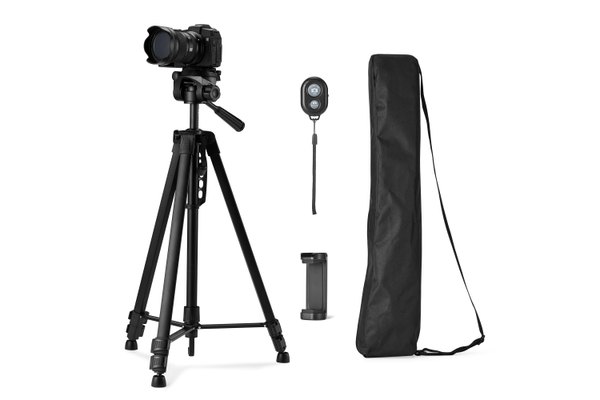 | Best Tripod | Amazon Basics 152cm Camera Tripod | Anyone shooting on hard or gravelly banks where a stick simply will not drive in, and especially anglers working off a phone. |
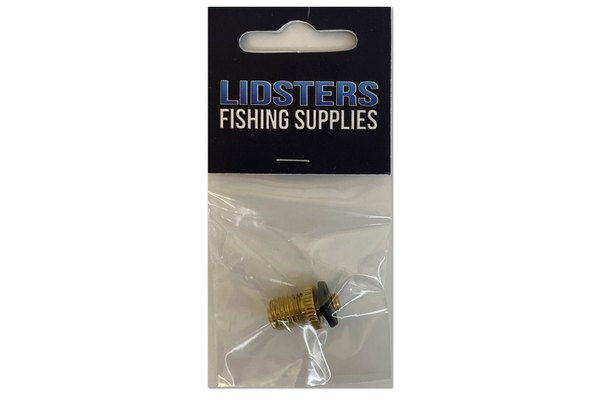 | Best Bank Stick Mount | Bank Stick Camera Adaptor | Carpers who already carry a pod or a set of sticks and want the smallest, simplest way to get a camera up at the right height. |
What makes a good fishing camera?
Cameras have been around in one form or another for centuries. But a wooden box with a curtain probably isn’t going to be the best camera for fishing.
You’ll need something that makes it perfectly suited, let’s explore some of those areas. Ideally you are looking for the following all in one package.
A portable fishing camera…
The best camera for fishing should be small enough that you can carry it with you wherever you go. If it is too much of a pain to lug around, you’ll end up leaving it behind.
With tacklebox space at a premium you want something that will fit into a bag or stuff sack. We are going to consider one or two bigger options such as DSLR’s, but because of their quality they can be quite technical, and due to their inner workings take up a lot more space.
A weatherproof fishing camera…
Regardless of what the elements may throw at you, it is probably a good idea to ensure that the best camera for fishing has some degree of weather resistance.
Some of the best fishing cameras can be fully submerged in water and still work. Whereas others may offer only light protection. You want to worry about showing your best side, not wondering if water is going to get inside the sensor.
An easy to use fishing camera…
Let’s face it, the main reason you are by the bank is to catch fish. Therefore it figures that you don’t want to be spending the vast majority of your time fiddling with various settings or struggling to get the perfect selfie.
Aside from it being a waste of valuable fishing time, it could be considered rather unethical to keep the fish out of the water for an extended period of time.
The best camera for fishing should enable you to get a really good fishing picture at the touch of a button, quickly, and with the minimum of fuss.
A high resolution fishing camera…
It’s literally all in the finer details. With memory and storage being extremely affordable the best fishing camera should be capable of taking high quality pictures. Why is resolution important?
If you catch an absolute unit of a fish you may very well want to have your pictures enlarged.
Whilst lower resolution images may look ok on a small scale, when they are enlarged the quality can suffer greatly.
Without going all technical, resolution is digitally measured in megapixels (or MP for short). The general aim is to get as high a megapixel count as you can.
Anything that is around 10MP is pretty good. 20MP and above and you will have crisp clear images that you can blow up to the size of a house.
A handsfree fishing camera…
Ok we know that we said ‘selfie’… But we don’t mean that in the ‘traditional’ way, i.e. your right arm leading diagonally into the corner of the image whilst you balance a carp precariously in the crook of your left, (and definitely no ‘duck face’).
We are talking more about self takes where you can assume a comfortable position with your fish within the frame, and by some means activate the shutter.
What you want to look for therefore, is either a timer mode, where you can make your way to the front of the camera in time for the shutter closing. Or, even better, activate the shutter wirelessly from any other position than holding the camera.
So now we have talked about some features that go into the best camera for fishing let’s take a look at some real life examples. There is a range of styles here, from snap-and-go types, to some that practically require a masters in photography.
It can be hard to take a decent picture, why not check out the video below for a few tips?
The Best Cameras For Fishing Self Takes Reviewed
GoPro HERO13 Black
#1 Best Overall
Waterproofing is where this one earns its keep. GoPro rate the HERO13 Black to 33ft, or 10m, and there's no case involved in getting there. On a British bank that matters more than the depth figure suggests, because the real test isn't diving, it's drizzle running down the lens for three hours while the camera sits on a stick waiting for a take. There's a water-repelling lens cover on the front as well, which GoPro say helps kill the flare and artifacts that otherwise ruin a shot taken in wet light.
The headline spec is 5.3K60 video and 27MP stills, and for a self take it's the video number I'd lean on. GoPro reckon 5.3K footage yields stills up to 24.7MP pulled straight out of the clip in the Quik app, and that's the single best trick in self-take photography: hit record, lift the fish, hold it for fifteen seconds, slip it back, then pick the frame where the fish isn't kicking and nobody's blinking. The fish is out of the water for a fraction of the time it takes to fumble through a burst of timer shots.
Triggering it is the other half of the job. The Quik app runs the camera from a phone, so recording can start while the fish is still resting in the net and the mat is still being wetted. That's the sequence I'd want on any big fish: camera rolling first, hands free afterwards, no sprinting back to a bank stick to press a button with a carp under one arm.
The catch is what's in the box. GoPro ship it with an Enduro battery, a curved adhesive mount, a mounting buckle and a thumb screw, and none of that helps on a bank stick or a tripod, because the adhesive mount is meant to be stuck to a helmet or a boat. Anyone planning self takes is buying a mount separately on day one, so it's worth ordering one at the same time rather than discovering the gap at the water. The Enduro battery is rated around 2.5 hours too, which suits a session of short clips but not a full day left rolling.
Best suited to
The angler who shoots in all weathers and wants one camera that handles rain, mud and a dunking without a housing anywhere near it.
Pros
- Waterproof to 10m with no case to fit, flood or lose
- Pulls 24.7MP stills straight out of 5.3K footage in the Quik app
- Quik app starts the camera from a phone, so no dash back to the stick
Cons
- Boxed mounts are adhesive, so a stick or tripod mount is an extra buy
- Enduro battery rated around 2.5 hours, so long sessions want a spare
DJI Osmo Action 5 Pro
#2 Best Premium
Two screens is the whole argument for this one. DJI put OLED touchscreens on the front and the back of the Osmo Action 5 Pro, and the front one solves the problem that ruins more self takes than anything else: not knowing whether the frame actually holds an angler and a fish until it's far too late to do it again. Glancing down at that front screen while kneeling on the mat, and seeing a head, a fish and a bit of water all in shot, is worth more to me than any resolution figure printed on the box.
Behind it sits a 1/1.3in sensor that DJI built around low-light performance, and that's the spec I'd point a carp angler at first. Fish get landed at dawn, at dusk and at three in the morning under a headtorch, and those are exactly the conditions where a small sensor turns a fish of the season into a grainy mess. Video runs to 4K at 120fps, stabilisation is 360 degree HorizonSteady, and there's subject tracking off a 4nm chip that DJI say holds a moving subject centred in either 16:9 or 9:16.
It's waterproof to 20m without a case, twice the GoPro's rating, and DJI quote up to 4 hours of battery. For fishing, that pairing means the camera can sit out on the pod through a filthy wet session with no housing to mist up and no mid-session charge to think about. Weather resistance and endurance are unglamorous specs that quietly decide whether the shot happens at all.
The honest catch is on the listing itself: DJI note the Mimo app has been pulled from Google Play over a platform compatibility issue, and that getting the current version now means scanning a QR code shown on the camera screen. The camera has to be activated in Mimo before it does anything, so Android users have a hoop to clear on the first evening rather than at the water. This is also the Standard Combo, which DJI describe as standard accessories only, so a bank stick or tripod mount still needs sorting separately.
Best suited to
Serious self-takers who want to see their own framing before the fish ever leaves the water, and who film as much as they photograph.
Pros
- Front OLED screen shows the framing while kneeling on the mat
- 1/1.3in sensor holds together at dawn, dusk and after dark
- Waterproof to 20m with no housing, and up to 4 hours per charge
Cons
- Mimo app is off Google Play, so Android activation needs a QR-code download
- Standard Combo carries standard accessories only, with no stick mount
AKASO EK7000 4K Action Camera
#3 Best Budget
A 2.4G wireless remote in the box is what earns the EK7000 its place here. Wet hands and a phone screen are a miserable combination, and a fish held across both forearms leaves nothing free to swipe with anyway. A remote that clips to a jacket, or sits in the same hand that's already under a carp, is the most useful thing a self-take camera can arrive with, and I rate AKASO for including one rather than selling it on separately.
The numbers read 4K at 30fps, 2.7K at 30fps and 20MP stills through a 170 degree wide angle lens. That field of view's doing the real work here: at the two or three metres I'd set a bank stick back from the mat, a narrow lens crops the tail clean off a decent common, while a wide one takes in the angler, the whole fish and enough bank to prove where it happened. Two rechargeable batteries come in the box with a dual USB charger, each good for around 90 minutes, which covers a session with one held in reserve.
WiFi runs through the AKASO GO app at up to 10 metres, so a phone works as a viewfinder for setting the frame long before a fish is anywhere near the mat. The bundled mounting kit is GoPro compatible, which matters more than it first sounds, because it means the entire aftermarket of clamps and bank stick adaptors fits it without adapters or bodges.
The compromises are real, though. Waterproofing comes from an IP68 case rather than the body, so the camera goes in a housing before it gets rained on, and that housing muffles audio and collects spray on its own flat port. AKASO also list image stabilisation as not present, so handheld footage will shake, though for a camera locked on a stick and pointed at a kneeling angler I don't think that registers much. Worth noting too that the spec table lists the viewing angle at 150 degrees against the 170 in the product title, so I'd treat the honest figure as sitting somewhere in that band.
Best suited to
Newcomers to self takes who want a physical remote in hand and a full mount kit in the box on day one.
Pros
- 2.4G remote included, workable with a fish across both arms
- Wide 170 degree lens fits angler, fish and bank into the frame
- Two batteries and a dual USB charger supplied in the box
Cons
- Needs its IP68 case for any water, unlike the case-free rivals here
- AKASO list no image stabilisation, so handheld clips shake
WOLFANG GA100 4K Action Camera
#4 Best Value
Selfie is listed as an actual recording mode on the GA100, sitting alongside time-lapse, loop, slow motion and continuous, and that tells me exactly who WOLFANG had in mind. It's a small line on a spec sheet and a genuinely useful one on the bank, because the camera arrives expecting its owner to be standing in front of it rather than crouched behind it.
The rest of the sheet is generous. Video runs 4K at 30fps, 2.7K at 30fps, 1080p at 60 and 720p at 120, stills step down through 20MP, 16MP, 12MP and 8MP, and the 170 degree wide angle swallows an angler and a fish at bank stick range without drama. WOLFANG bundle a remote control, an external noise-cancelling microphone and two batteries, plus a spread of mounting accessories, so the first trip out doesn't come with a shopping list attached.
EIS stabilisation is aboard, which the AKASO does without, and the waterproof case is rated to 40m. That depth's well beyond any coarse fishery in Britain and rather beside the point, except that it tells me the housing is built to shrug off a downpour and a camera dropped in the margins. At 43g the body is light enough that a bank stick adaptor won't sag under it, and the whole thing measures around 6cm across, so it vanishes into a pocket of the barrow bag.
My reservation is the 1/2.7in sensor, and no amount of 4K in the title changes what a small sensor does once the light drops. Dawn and dusk shots come out noisier than the DJI's, and dawn and dusk are when a great many carp get landed. Water protection also rests entirely on the case rather than the body, so a cracked or badly seated housing is the difference between a camera and a paperweight, and the IBK CAM app driving it is a generic third-party affair rather than something WOLFANG built and support properly.
Best suited to
Anglers after a complete package in one box: camera, remote, mounts and spare batteries, ready to shoot on the very first session.
Pros
- Selfie included as a dedicated recording mode, not an afterthought
- Remote, external mic, two batteries and mounts all bundled
- EIS stabilisation plus a case rated to 40m
Cons
- Small 1/2.7in sensor turns noisy as the light drops
- Water protection rests on the case, not the camera body
Amazon Basics 152cm Camera Tripod
#5 Best Tripod
Height is what sells this one to me. It extends from 22in right up to 60in, or 152cm, and that top end is the difference between a self take framed from chest height, which looks like a photograph, and one framed from knee height, which looks like a snapshot of somebody's waders. Most anglers want the camera at roughly chest height with the mat sitting in the bottom of the frame, and this reaches that comfortably with a leg section still spare.
The legs are three-section aluminium alloy with locks on each section, and the three-way pan head gives 360 degrees of horizontal rotation and 180 degrees of vertical tilt. That tilt range is the part I see overlooked most, and it shouldn't be: angling the camera down onto a kneeling angler, rather than letting it stare flat over the top of them at the far bank, is most of what separates a deliberate self take from an accident.
A detachable wireless remote comes with it, rated at 30ft and working with Android and iOS alike, which puts this firmly in self-take territory rather than general tripod territory. The phone holder takes phones up to 3.3in wide and the head accepts most digital cameras, so it serves the anglers shooting on a handset and the ones shooting on an action camera equally. It weighs 1.11kg and packs into a supplied storage bag, so it rides in a barrow without much protest.
Where it gives ground is the build. Lightweight aluminium is precisely what makes it portable, and it's precisely what makes it skittish in a crosswind on an exposed bank, so I'd hang a bag off the centre column on any breezy day. The 3.3in phone holder limit is tighter than it sounds as well, since a large handset in a chunky case can miss it altogether. Nothing here is weather sealed either, so it wants wiping down and drying off after a wet session rather than being left out in one.
Best suited to
Anyone shooting on hard or gravelly banks where a stick simply will not drive in, and especially anglers working off a phone.
Pros
- Reaches a full 60in, enough for a proper chest-height frame
- Detachable remote rated to 30ft, on Android and iOS
- Three-way head tilts 180 degrees to look down onto the mat
Cons
- Light aluminium build gets skittish in a crosswind on open banks
- Phone holder stops at 3.3in wide, so big cased handsets miss
Bank Stick Camera Adaptor
#6 Best Bank Stick Mount
There's almost nothing to this, and that's precisely the appeal. It's a small connector from a fishing supplier: one end threads onto a bank stick, a pod, or anything else stable, and the other takes the fitting on nearly any modern camera. The listing puts it at 10g. For an angler already walking to a swim with sticks in the quiver, that's the whole camera support problem answered by something that disappears into a pocket.
The job it does is exactly the one this guide is about. A stick already driven into the bank at the right distance from the mat makes a better camera platform than most tripods, to my mind, for the simple reason that it's already there, already solid and already at roughly the right height. Screwing a camera onto the top of one takes seconds, and seconds are the currency: it's the difference between a fish waiting in the net while the shot gets set up and a fish waiting on a mat while it gets set up.
I'd set expectations properly, though. This is a no-brand part from a small supplier rather than engineered kit, and the listing shows it. The title calls it gold, the first bullet calls it silver, and the colour field says black and gold, which isn't the sort of thing that happens on a listing anyone proofread. There's no thread size quoted, no material stated and no load rating given, so it's one to buy on the understanding that it's a simple connector doing a simple job, and to test against a camera at home before trusting it with a fish of a lifetime.
The real limitation is the obvious one: it needs ground that will take a bank stick. On soft margins it's perfect. On gravel bars, concrete platforms, decked pegs and the baked clay of an August drought there's nothing to push into, and it becomes dead weight in a pocket. Amazon also list it as not water resistant, and the buy box on listings this thin tends to rotate between sellers, so what lands on the doormat can vary. Anyone fishing varied venues should own the tripod too, and treat this as the light option for the days that suit it.
Best suited to
Carpers who already carry a pod or a set of sticks and want the smallest, simplest way to get a camera up at the right height.
Pros
- Packs down to nothing at a listed 10g
- Turns a bank stick already in the ground into a camera platform
- Camera end fits nearly all modern cameras
Cons
- Dead weight on gravel, decking or ground too hard to take a stick
- Thin listing contradicts itself on colour and states no material
Fishing Camera FAQs
Still deciding what to point at yourself?
These are the questions worth settling before buying.
What camera do you need for fishing self takes?
Any camera that can fire on a timer or a remote will do the job, which is why an action camera suits it so well. The things that matter are a wide lens so you and the fish both fit in frame, some weather resistance for the British bank, and a trigger you can reach with wet hands. Resolution matters far less than most anglers expect.
How do you take a self take of a fish on your own?
Mount the camera on a tripod or a bank stick at roughly chest height, frame the spot where you will kneel with the mat in shot, then set a timer or use the remote. Most anglers fire a burst or record video and pull a still from it, which means the fish spends far less time out of the water while you fiddle with settings.
Can you mount a camera on a bank stick?
Yes, and it is the cheapest way to do it if you already carry sticks. A small adaptor threads onto a standard bank stick at one end and takes the camera's tripod thread at the other. It packs down to nothing, though it only works if the ground takes a stick, so a tripod is the more dependable option on hard or gravelly banks.
Is an action camera or a compact camera better for self takes?
An action camera, for most anglers. It is waterproof, the lens is wide enough to catch you and a big fish at close range, and it can be triggered from a phone app or a remote. The compact cameras that used to suit this job have largely been discontinued, and the ones still listed tend to be sold at a premium or replaced by no-name models with claims that do not stand up.
Conclusion...
Taking a nice picture is making a memory, so why not make your memories as nice as possible. Further to this you can firmly secure bragging rights if you have a nice clear image of you holding your latest rod bender.
On a side note to this always ensure you have adequate protection to the fish in the form of a suitable unhooking mat or fishing cradle.
The best camera for fishing self will vary based on individual requirements. Hopefully you’ll be able to make a 'snap decision' and get to use it regularly...
So there you have it, our ideas on the best cameras for fishing self takes.
If you need any fishing tackle please consider visiting one of our recommended online fishing tackle shops.
Related Articles...

Best Carp Cradles
This article will take you through the key features of the best carp cradles to help you make an informed decision on the best one to choose for your carp fishing.

7 Best Carp Landing Nets
If your landing net isn’t up to the job it’s going to lead to heartbreak at the worst possible time. Check out this review on the best carp landing nets today.

Best Fishing Scales
By using fishing scales, you can accurately and easily remove any doubt. This article details the key features of the best fishing scales on the market today.