
The Best Fishing Line For UK Fishing (Full Guide To Mono, Fluorocarbon And Braid) 2026
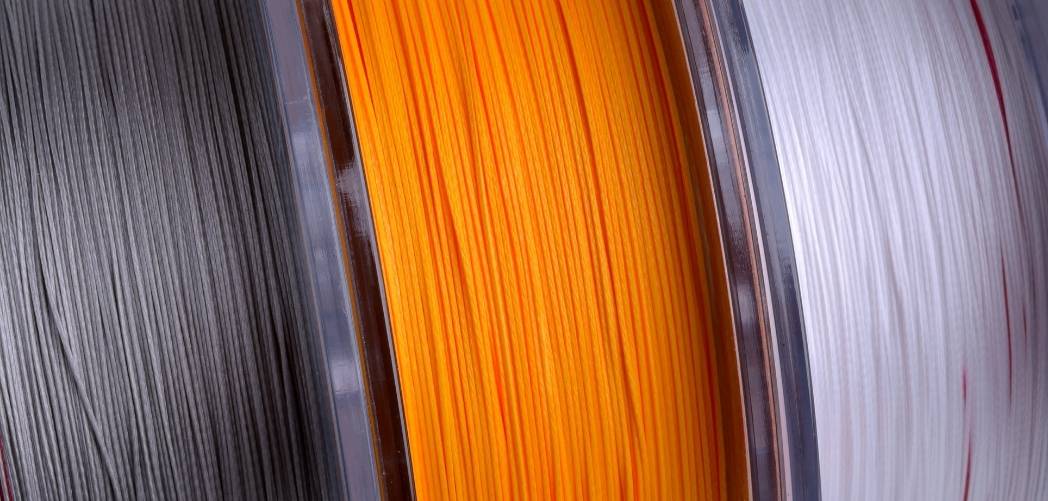
Whilst your rod and reel are certainly vital bits of tackle it can be the little things that make all the difference to your catch rate. One often neglected area is the choice of fishing line.
If you are thinking ‘it’s just line’ or “it doesn’t matter”, we are going to show you why choosing the best fishing line absolutely is important.
Stop and think about it…
What is the single thing that connects you with the fish? That’s right, the line. If you have a substandard rod you might manage to land your catch, likewise with a substandard reel.
But if your line isn’t up to the task you can reduce your chances of ‘getting one in the net’ to practically zero. If you consider that your line actually also makes up the bulk of what you have beneath the surface it pays dividends to invest.
This article will go into depth about what things you need to look at and how you can decide on the best fishing line for you.
Quick Answer
The Daiwa Sensor Clear Bulk Spool is my top overall pick because it is the mono most UK anglers have grown up trusting, and it knots and holds its diameter as consistently as anything out there.
For a cheaper start, my pick would be the Trakker Mono Reel Line 1000m. The table below matches each line to the job it does, from a first spool of mono to true fluorocarbon and braid.
| Best for | Line | Best suited to | |
|---|---|---|---|
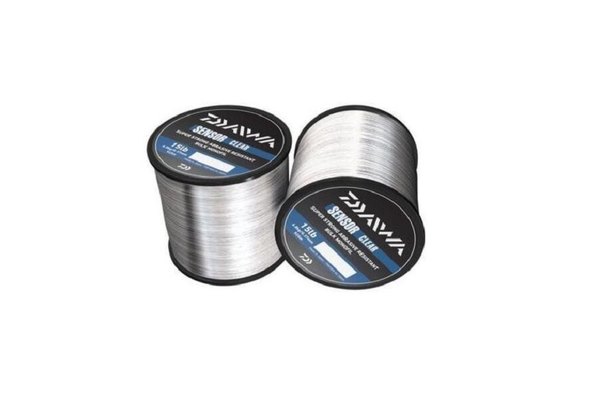 | Best Overall | Daiwa Sensor Clear Bulk Spool | Anglers who want one mono they can stop thinking about, bought in enough quantity to load several reels from a single spool. |
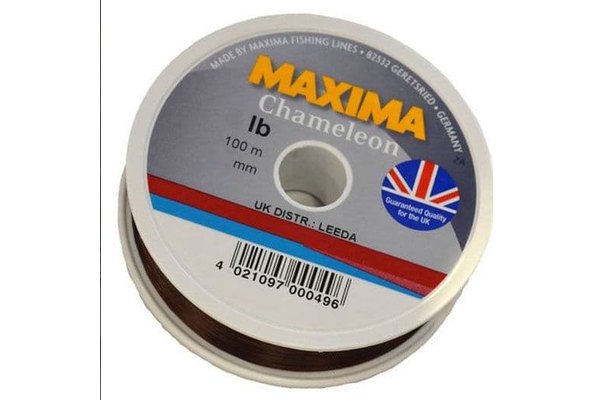 | Best for Beginners | Maxima Chameleon | Anglers new to the bank who want a small, forgiving spool available in almost any strain before committing to one. |
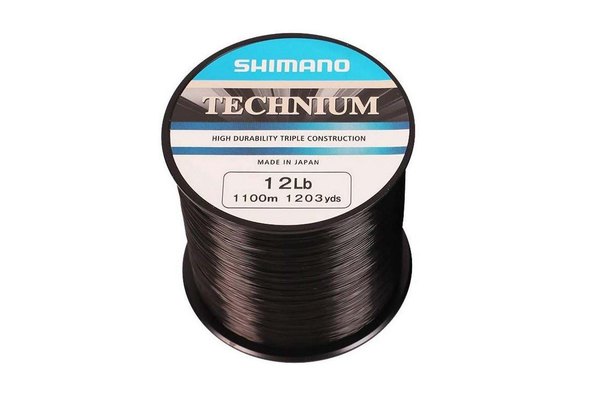 | Best Sinking Mono | Shimano Technium | Anglers who need line to get down out of the tow and telegraph a bite instead of stretching it away. |
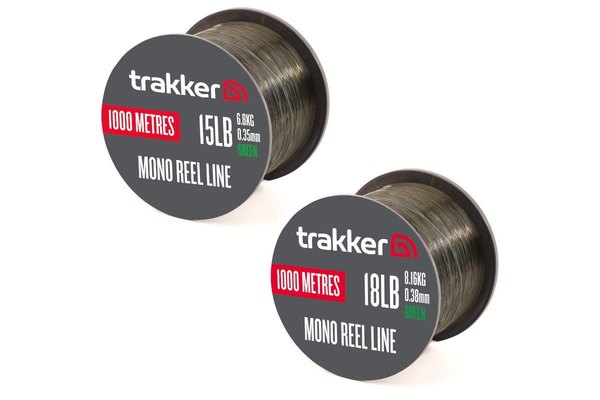 | Best Value Bulk Spool | Trakker Mono Reel Line 1000m | Anglers loading three reels at once who want dark green sinking mono by the kilometre and no ceremony about it. |
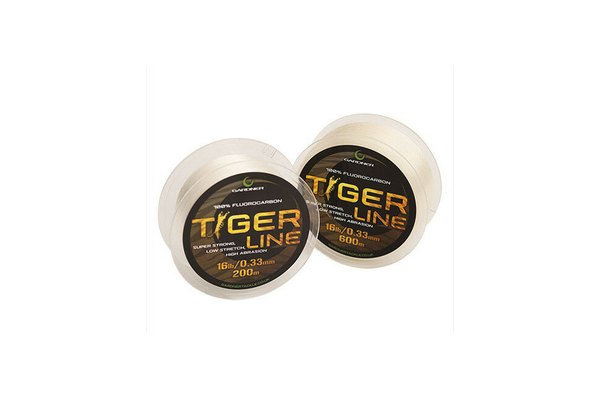 | Best Fluorocarbon | Gardner Tiger Line | Anglers who want genuine 100% fluorocarbon rather than a coated line borrowing the name. |
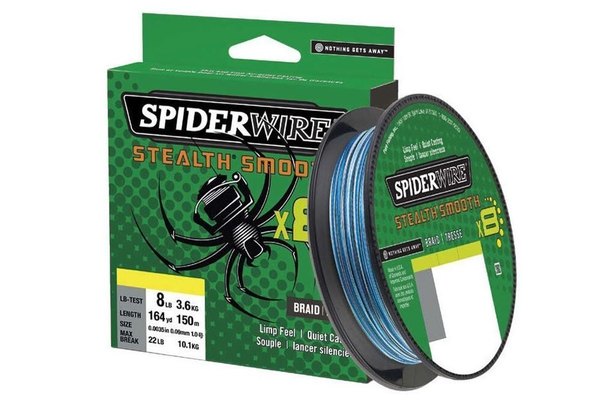 | Best Braid | Spiderwire Stealth Smooth 8 Braid | Anglers who want a tight-woven 8 carrier braid for direct contact with a bait at range. |
The Best Fishing Lines Reviewed
Daiwa Sensor Clear Bulk Spool
#1 Best Overall
Daiwa reckon Sensor is "without doubt the number one monofil in the UK", which is a bold thing for a catalogue to print, but the record backs the bragging. It has scooped multiple awards, landed two British record carp, and stayed popular with anglers across all disciplines. That last part is what wins it best overall here: Sensor is not the specialist at any one job, it is the mono that quietly does every job asked of it.
On the reel it simply behaves. It is supple enough to lie flat and leave the spool cleanly, and the knotting is the part I trust most: knots pull down neat and hold when it matters. Daiwa make a point of the consistent diameter, and that is something an angler feels rather than reads, because line that thickens and thins along its length is line that lets go at the worst possible moment. Add the durability and the rugged feel and there is not much left to argue with.
The numbers are straightforward. At 8lb it runs 0.26mm and puts 1855m on the spool, and at 12lb it is 0.330mm for 1160m. Either way this is a bulk spool, and that is the honest framing rather than a sales angle: there is enough line here to fill several reels in one session and still leave plenty in reserve for next season.
The catch is the range. The strains actually offered start at 8lb and run up to 30lb, so anybody after a fine mono for delicate float work is in the wrong place, whatever the lighter entries in the description table suggest. It is clear line, too, so an angler who specifically wants dark mono pinned to the lakebed is better served further down this list.
Best suited to
Anglers who want one mono they can stop thinking about, bought in enough quantity to load several reels from a single spool.
Pros
- Knots down neat and holds, with a genuinely consistent diameter
- One bulk spool loads several reels over and over
- Proven across every discipline rather than one niche
Cons
- Nothing lighter than 8lb, so no good for fine float work
- Clear line, when some jobs call for dark and sinking
Maxima Chameleon
#2 Best for Beginners
Two pounds up to thirty pounds. That spread is exactly why Chameleon is where I send somebody buying their first line, because nobody starting out has any real idea yet what strain they will settle on, and a modest spool of this covers whatever the answer turns out to be. Maxima call it a no nonsense product that works, which for once is the marketing underselling itself.
It has been the number one choice for general purpose fishing for many years, and it is still regarded as one of the strongest standard monofilament leader lines today. The Chameleon colour keeps it low in visibility across a wide range of water conditions, which spares a beginner the whole business of matching line colour to venue before they have even learned to cast. Plenty of salmon fly anglers pick it for that same reason.
The build is what makes it forgiving. A special surface coating stops the line drinking water, so its strength stays consistent wet or dry, and a hardened surface delivers superb abrasion resistance along with extra high knot strength. Maxima deliberately balance strength against elasticity, and that bit of give is a real kindness while somebody is still working out what the clutch on a reel is actually for. Spools come in 100m and in 600m.
The catch is that the 100m spool is not much line. It is ideal for a first outing, and it doubles nicely for leaders and hooklengths, but filling a big reel means working through several of them or stepping up to the 600m spool instead. It is a general purpose line as well, so it will not out-cast a mono built specifically for distance.
Best suited to
Anglers new to the bank who want a small, forgiving spool available in almost any strain before committing to one.
Pros
- Strains from 2lb to 30lb, so any first setup is covered
- Surface coating keeps strength the same wet or dry
- Low visibility across all sorts of water without any thought
Cons
- A 100m spool goes nowhere near filling a big reel
- General purpose by design, so beaten on distance by specialists
Shimano Technium
#3 Best Sinking Mono
Twelve percent. That is the linear stretch Shimano claim for Technium, and it is the single number that earns this line its slot, because ordinary mono stretches a good deal further and swallows small knocks before they ever reach the rod. Technium is a low stretch sinking mono that pairs excellent strength with high abrasion resistance, and Shimano describe it as the compromise between braid and normal mono, which strikes me as fair.
The sinking half is what I appreciate most on a rough day. Line sitting up in the surface gets shoved about by tow and drift until nothing happening at the bait end means anything, whereas Technium goes down and stays out of the argument. What comes back is contact: bites register rather than being absorbed, and there is still enough give to play a fish without the harshness of a zero stretch braid.
It is built in three layers. Shimano say the centre core carries the low stretch, halving it against a standard mono; the second layer supplies the suppleness that is obvious the moment it is handled; the outer layer shields it from UV light and leaves a silky smooth surface that cuts friction on the cast. At 8lb it is 0.26mm and 1920m, at 12lb it is 0.32mm and 1100m, sold here as a quarter pound bulk spool.
Low stretch cuts both ways, though, and that is the honest catch. The cushion a stretchier mono gives during a lunge under the rod tip is simply not there, so a clutch wants setting with some thought. Strains stop at 8lb at the light end, and a mono engineered to sink is the last thing a float angler wants under a waggler.
Best suited to
Anglers who need line to get down out of the tow and telegraph a bite instead of stretching it away.
Pros
- Linear stretch cut to 12%, so knocks reach the rod
- Sinks clear of surface tow and wind drift
- Silky outer layer casts smoothly and shrugs off UV
Cons
- Less cushion than a stretchy mono when a fish lunges
- Sinking line is exactly wrong for float work
Trakker Mono Reel Line 1000m
#4 Best Value Bulk Spool
A thousand metres. Trakker went and put the number in the product name, and it is the whole reason this spool sits here: their own claim is that it holds enough to comfortably fill at least 3 spools in one go, and it is that arithmetic, not any clever technology, that makes it the value pick of the six.
What comes off the spool is a quality dark green fast sinking mono, and both halves of that phrase pull their weight. It is supple enough to hug the contours of the lakebed rather than bridging across them, so it settles where it is put instead of hanging about in the water waiting to be moved by the wind. Trakker describe it as ultra-smooth and low diameter for distance casting, and it does go out without complaining.
Everything else about it is what a mainline is meant to do rather than anything exotic: high knot strength, abrasion resistant, and what Trakker sum up as all-round performance from a dark green monofilament mainline. Strains run 12lb, 15lb, 18lb, 20lb and 25lb. There is no per-strain diameter table to pore over, which honestly suits a line bought by the kilometre rather than by the micron.
The catch is that floor of 12lb. This is a carp and specimen line by strain alone, and no amount of goodwill turns it into the answer for light float work after roach and skimmers. One more thing worth flagging: the TFT listing opens by calling these large capacity 100m spools, which contradicts both the product name and its own features list further down. It is a typo on their part. The spools are 1000m.
Best suited to
Anglers loading three reels at once who want dark green sinking mono by the kilometre and no ceremony about it.
Pros
- One spool comfortably fills at least 3 reels
- Fast sinking and supple, so it tracks the lakebed
- Smooth and low diameter, so distance comes easily
Cons
- Starts at 12lb, so it is no use for light float fishing
- The listing itself misprints the spool length, which confuses buyers
Gardner Tiger Line
#5 Best Fluorocarbon
Here is the thing that catches more anglers out than anything else on the tackle shop wall: a great deal of what gets sold as fluorocarbon is not fluorocarbon. The words to watch for are "fluorocarbon coated", which means a nylon line wearing a thin fluoro jacket and behaving, unsurprisingly, like nylon. Gardner Tiger Line is a true 100% fluorocarbon, and that alone is what holds it this slot.
The appeal of the real thing is that it is virtually invisible in water, and that it sinks quickly and completely, which pins the line down and improves how a bait sits. Low stretch brings greater sensitivity, with more control and feel, so what happens at the hook end actually arrives at the rod. Gardner also claim it is easier and smoother to cast than an angler might expect of fluoro, and I would not argue.
Tiger Line was developed by Big Carp and John Llewellyn, and Gardner call it a multi-directional polymer that provides exceptional abrasion resistance and knot strength. Their term stays where they left it, because they never explain it and I am not about to invent the physics for them. The abrasion resistance is real enough over gravel, and it resists deterioration in sunlight, which keeps it long lasting. This page is the 16lb, on 200m or 600m spools.
The catch is choice, or the lack of it. Sixteen pounds is the only strain offered here, so anyone wanting something finer for delicate work or heavier for real snags must look elsewhere. A line that sinks fast with barely any stretch is also wrong for float fishing or anything presented on the surface, so it pays to be certain the invisibility is genuinely needed rather than just assumed.
Best suited to
Anglers who want genuine 100% fluorocarbon rather than a coated line borrowing the name.
Pros
- Genuinely 100% fluorocarbon, not a coated impostor
- Virtually invisible and sinks quickly and completely
- Low stretch for real feel, plus it shrugs off sunlight
Cons
- 16lb is the only strain on offer here
- Fast sinking and low stretch rule it out for float work
Spiderwire Stealth Smooth 8 Braid
#6 Best Braid
Braid is in this guide for one reason, and it is not distance: there is next to no stretch in the stuff, so a bite is a bite rather than a rumour that reaches the rod tip once the fish has already gone. Stealth Smooth 8 is a tight-woven, 8 carrier braided line made in the USA, and it is the one I would hand to an angler who wants that directness without any drama attached.
Spiderwire put the casting down to the tight weave working alongside a micro coating, and credit the same pairing with high abrasion resistance. What I notice most is the quiet. It leaves the rings without the rasp a rougher braid saws out on every cast, and that smoothness is what keeps distance consistent all session rather than just on the first chuck while the line is fresh.
The spread of strains is generous: 22lb, 28lb, 36lb, 39lb, 52lb, 58lb and 83lb, and every last one of them comes on a 300m spool, so the length at least is a known quantity whichever one gets picked. There's a colour to settle on as well, running from Hi Vis Yellow through Blue and Code Red to Moss Green and Camo, and that choice is worth a moment's thought rather than a shrug: a braid an angler can follow across the surface is a different tool from one meant to disappear against a weedy bed.
Now the honest part, and it is a proper irritation. The listing states no diameters at all, not a single millimetre figure anywhere on the page, and braid is normally chosen by diameter rather than breaking strain, because diameter is what governs how much fits on a reel and how well it cuts through wind. That absence leaves an angler guessing. Worth checking the rule book too: plenty of UK fisheries ban braid as a mainline outright, so the venue may settle this before the spec does.
Best suited to
Anglers who want a tight-woven 8 carrier braid for direct contact with a bait at range.
Pros
- Tight weave and micro coating cast smooth and quiet
- Seven strains, every one on a 300m spool
- No stretch, so contact with the bait is direct
Cons
- Not one diameter stated, which is how braid is usually chosen
- Banned as a mainline on a lot of UK fisheries
How to load your reel spool with line
So, you have decided what fishing line is best for your fishing type and the reel you are using. The next stage is to load the line onto your reel.
This task isn't as easy as you think, and many anglers often get this wrong. The consequence of this is poor line lay, which ultimately leads to more tangles, kinks in the line, and reduced performance.
There are tools on the market that aid you in loading your spool with line quickly and efficiently. One of these tools is actually called a fishing line spooler. They work by simply allowing the line to peel off the spool in a frictionless way that frees both your hands to easily wind the reel with ease.
You can check out more information on fishing line spoolers as follows:
It's difficult to put into words how to effectively and efficiently load your chosen line onto your reel. So please check out the following video that provides some tips on how to do it the right way:
What is the best fishing line to use?
The short answer is that it depends on what you are wanting to do with it. There is huge variation depending on what species you are seeking, what rod you are using, what method you are fishing, and whether you are using it as a mainline or for tying rigs.
Choosing the best line is a balancing act. You need to weigh up a variety of factors. These factors are multiple but we can break them down into some key areas. Here are some guidelines to decide what's right for you...
What is the Best Fishing Line thickness
We recommend at least a 5lbs breaking strain as a minimum, which should cover you for around 80% of all of your fishing if you are just generally angling. However, line thickness isn’t just dictated by the size of fish you are hoping to catch.
If you have too fine a line your reel will be underloaded, leading to degraded casting performance. Likewise, if it is overfull with a thick fishing line you are going to get the line spilling off at the wrong time. As a general guide, you don’t want a line that is too thick or thin.
Fishing Line stretch
Do you have a rod with a fast action that will absorb any shocks? Are you fishing for a species that takes violently, or more sedately? Are you fishing using a method where feel is ultra-important?
Fishing Line Visibility
Some fish are warier than others, some venues are clearer than others, or you yourself may need to be able to easily see your line in low light conditions. All of these factors play a part in choosing the best fishing line.
Fishing line performance
Do you fish somewhere with snags or rocks, do you need abrasion resistance? Do you need a floating or sinking fishing line? Are you loading a small float fishing reel or a Meaty sea fishing reel?
Do you have the answers?
When you know the answer to all these questions you will be in a good position to find the best fishing line. When it comes to the lines themselves, we can offer some guidance if asked what is the best fishing line?
Let’s take a look -
Is braid the best fishing line?
Braid is unique. It is a super hard-wearing line that is also very soft. It soaks up water and sinks well. If you are looking for bites to be instantaneously transmitted, you will find that this is the best fishing line.
But (and it’s a big but) braid doesn’t win any prizes for being the least visible fishing line. It creates a hard silhouette in the water. Negating this (slightly) is that even for high breaking strains it is very thin.
Check out this video that details some situations on when to use braid:
Is monofilament the best fishing line?
Monofilament is a standard choice offering some superb benefits. It is super stretchy, so if you are going for a species that bites hard, or are using a stiff rod, your line can act as some well needed ‘suspension’.
The downside is that it is the thickest type of line you can get, so you may have to make a trade-off between thickness and quantity, depending on the size of your spool. Monofilament also floats, for surface baits this might be ok, but for clear waters it can create a shadow, so may not always be the best fishing line.
Is fluorocarbon the best fishing line?
Fluorocarbon is a sort of halfway house between braid and mono in terms of stretch. This is our favourite line for carp fishing especially when surface fishing or fishing clear waters . The reason being is that it is denser (and for that read ‘thinner’) than mono for the same breaking strain.
Giving you the option of going slightly finer with no performance penalty. It also sinks really well. As a slight downside, it can be stiffer than mono and braid and its main weak point is around knots.
The best bit about fluorocarbon is that it is nearly invisible in the water. You can check out another article we have written on the best fluorocarbon line for Carp fishing for more information.
What colour is the best fishing line?
If you are choosing, you’d be forgiven for thinking the darker the better. However Black line can be quite visible in certain conditions. As a general rule we like green fishing line or brown fishing line, as this tends to blend in the vast majority of scenarios.
For camouflage, the best bet is to go for fluorocarbon, due to its low refractive index it is simply invisible, regardless of water colour.
Fishing Line FAQs
Still weighing up mono against braid?
These are the questions worth settling before loading a spool.
Should I choose mono, braid or fluorocarbon?
Mono is the sensible default for most UK coarse and carp fishing, which is why four of my six picks are mono: it stretches enough to forgive a mistake, it knots easily and it handles nearly every job on the bank. Braid has virtually no stretch, so it gives direct contact and sharper bite registration at range, but that same lack of give is unforgiving and a lot of fisheries ban it as a mainline. Fluorocarbon is close to invisible in water and sinks, so it earns its keep where clear water and wary fish make presentation the deciding factor. Anyone with one reel and a mixed season ahead should start with mono.
What breaking strain do I need for general coarse fishing?
For roach, skimmers, tench and the odd carp, something in the 4lb to 8lb bracket covers most of it, with the lighter end suiting float work and the heavier end making sense once better fish are likely. Step up to 12lb or 15lb for carp and specimen work, or anywhere gravel bars and snags are in play. The mistake I see most often is going far too heavy in the belief that strong line equals landed fish: thicker line casts worse, sits worse in the water and puts fish off. Match the line to the fish and the venue rather than to the worst thing that could conceivably happen.
Is fluorocarbon worth it?
That depends entirely on whether it is real fluorocarbon. The trap is that plenty of line sold as fluorocarbon is actually described as fluorocarbon coated, which is nylon with a thin fluoro skin over it, and it does not behave like the genuine article. Only a line that states 100% fluorocarbon, as the Gardner Tiger Line does, is the real thing. Where it earns its keep is clear water and pressured fish, because true fluoro is virtually invisible in water and sinks quickly, pinning the line out of the way. On a coloured venue or a rough windy day, honest mono does the job just as well.
How often should fishing line be changed?
Line does not last forever, and sunlight is what quietly kills it. UV light, abrasion over gravel and general wear all take the strength out of mono, so a spool fished hard through a season wants stripping off and replacing at the start of the next one. An angler who gets out occasionally can stretch that a fair bit further, but the test is simple enough: run a few metres through the fingers, and if it feels rough, looks faded or comes back with nicks in it, bin it. Braid lasts considerably longer and can often be turned around on the spool to freshen up the business end, while lines built to resist sunlight, as the Shimano Technium and Gardner Tiger Line both are, hold up better than most.
Final Thoughts
The best fishing line to use has so many answers. Are you wanting to go for improved performance with regards to visibility? Do you fish at a venue that is known for sharp rocks that may break more fragile lines?
Or are you looking for something strong and heavy to enable you to throw a 5oz lead into the wild blue yonder? You might be looking for a mixture of all of these qualities. Or none at all.
The bottom line (excuse the pun!) is that you have to choose the right fishing line for the type of fishing you are doing on the day. The best fishing line is one that ticks all the boxes dependent on your needs.
Related Articles...

Best Carp Rigs For Beginners
In this article, we take you through everything you need to know about carp fishing rigs for beginners from what tools you need to how to tie them.

Best Carp Fishing Lines
In this article, we will give you an insight into what considerations to take in choosing the right carp fishing line for your specific circumstances. We will also tell you what we consider the 9 best carp fishing lines on the market today and why.

The Best Feeder Reels
A number of factors go into the best feeder reels. In this article, we’ll look at a couple of really good options that should help to get a bend in your rod and plenty of fish on the bank.