
Best Carp Fishing Lines 2026
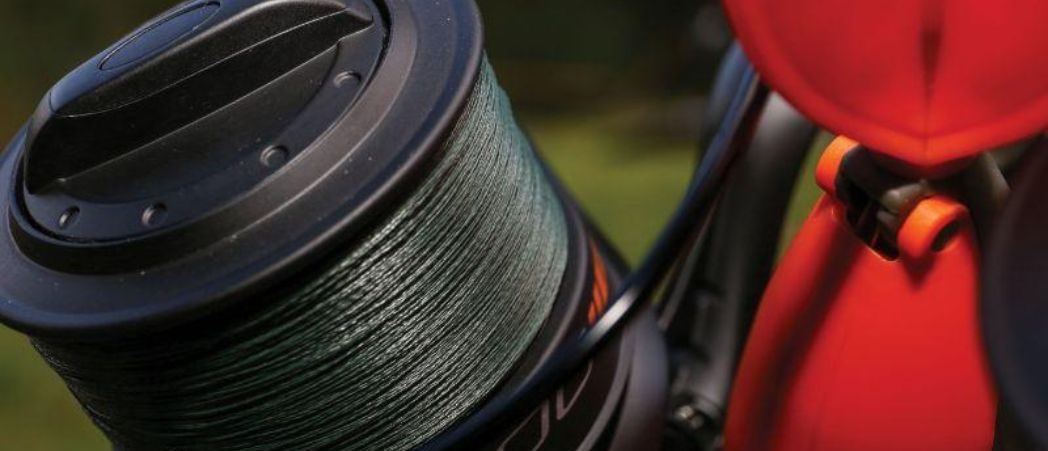
So, does it really matter what fishing line you choose? After all, you're going to be using a rig as part of your end tackle right?
Well, it does and the fact that you are reading an article on the best carp fishing lines means you care and probably know it does matter!
In this article, we will give you an insight into what considerations to take in choosing the right carp fishing line for your specific circumstances. We will also tell you what we consider the best lines for carp fishing on the market today and why.
Quick Answer
There is no single best carp line, only the best line for the job: the Daiwa Tournament SLR Mono is my pick as the do-it-all mono most anglers should start with.
From there it is about matching the line to the tactic. The table below lays out the shortlist by the job each line does, from braid for distance and spodding to fluorocarbon for clear water and surface work.
| Rank | Best for | Line | Best suited to |
|---|---|---|---|
| #1 | Best Mono Mainline | Daiwa Tournament SLR Mono | Anglers wanting one versatile, cost-effective line for general carp fishing. |
| #2 | Top Braided Mainline | Korda Subbraid Braided Mainline | Anglers who want zero stretch and maximum bite sensitivity at range. |
| #3 | For Spodding & Marking | Sonik Spod & Marker Braid | Anglers loading a dedicated spod or marker reel. |
| #4 | For Surface Fishing | Korda IQ Fluorocarbon | Surface anglers who want a low-visibility floater hooklink. |
| #5 | For Long-Range Casting | Fox Submerge Sinking Braid | Anglers casting long who need to stay in touch with the rig. |
| #6 | For Clear Water | X-Line Fluorocarbon | Anglers fishing clear, pressured water where line shyness matters. |
| #7 | Best Sinking Line | Korda Subline | Anglers fishing tight to snags or heavy abrasion. |
The Best Carp Fishing Lines
This article will take you through all the considerations to think about before purchasing the right carp fishing line. However, we'll start by cutting to the chase with our recommendations on some of the top carp lines out there. All our choices tick the required boxes mentioned in this guide.
Daiwa Tournament SLR Mono
#1 Best Mono Mainline
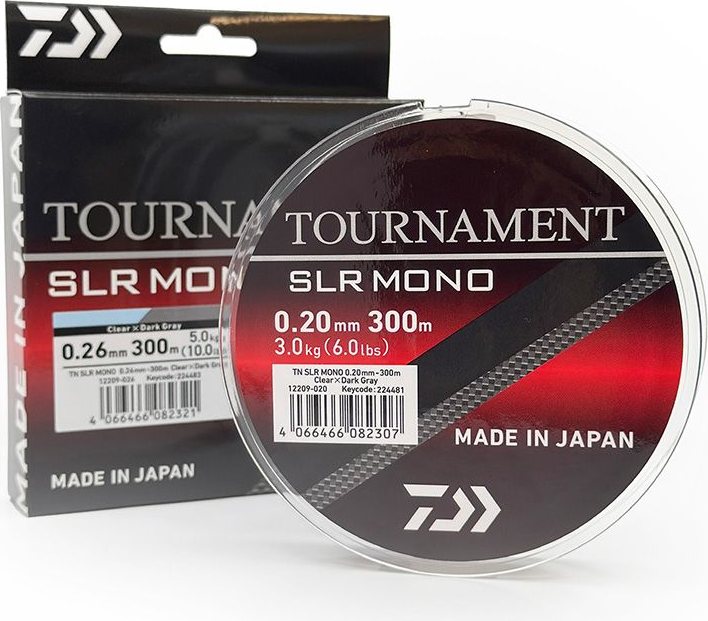
The Daiwa Tournament SLR is the mono I would put on most reels for most sessions. Monofilament is the do-it-all carp line, and this is a properly made one: supple, strong and forgiving without any fuss.
The slight stretch in mono is a feature, not a fault. It cushions the lunges of a big fish under the rod tip and takes the sting out of a hooked carp bolting, which is exactly what I want for general work at sensible range.
It knots well, sits neatly on the spool and casts smoothly, and it is far kinder on the wallet than braid or fluorocarbon when a 300m spool loads two reels. For everyday fishing where nothing more specialist is needed, it just works.
It is thicker and more visible than fluorocarbon, so in gin-clear water I would switch. But as the one line to reach for first, a good mono like the SLR is very hard to beat.
Best suited to
Anglers wanting one versatile, cost-effective line for general carp fishing.
Pros
- Versatile all-round carp line
- Forgiving stretch cushions big fish
- Great value per spool
Cons
- Thicker and more visible than fluoro
- More stretch than braid
Korda Subbraid Braided Mainline
#2 Top Braided Mainline
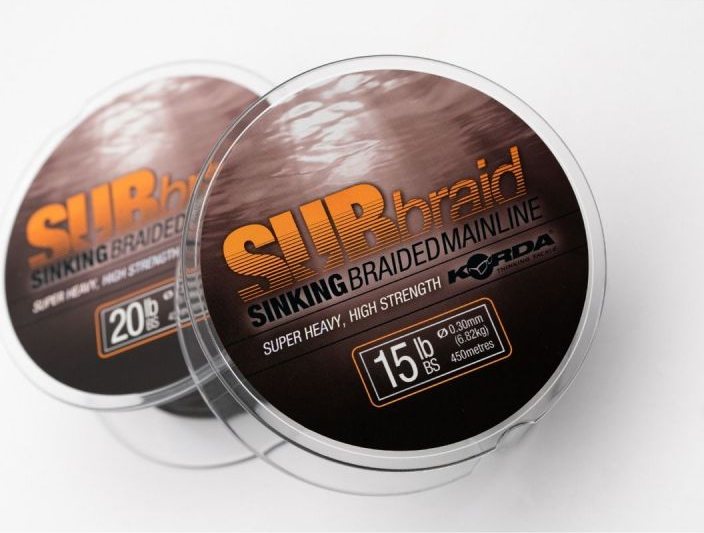
The Korda Subbraid is the one I reach for when I want zero stretch and maximum contact. As a braided mainline it has almost no give, so every knock and drop-back registers straight at the rod tip.
That lack of stretch is the whole appeal. On a long chuck it puts more of the cast into distance instead of absorbing it, and it keeps me pinned to the rig so bite indication stays sharp even at range.
Crucially for a braid, the Subbraid is designed to sink, so it lies along the lakebed out of the way rather than bowing up in the water. It is not the thinnest braid going, and Korda are open that the slightly greater diameter is exactly what gives it those sinking properties, but it is strong and built to Korda's usual standard.
Braid needs spooling carefully and costs more than mono, and it is not the line for fishing tight to snags where abrasion matters. But for sensitivity and distance, nothing here matches it.
Best suited to
Anglers who want zero stretch and maximum bite sensitivity at range.
Pros
- Near-zero stretch for sharp bite indication
- Sinks well and lies out of the way
- Thin for its breaking strain
Cons
- Dearer than mono
- Needs careful spooling
Sonik Spod & Marker Braid
#3 For Spodding & Marking

The Sonik Spod and Marker Braid is the line I put on the spod and marker reels, and it is built for exactly that job. Spodding and marker work need strength and no stretch, and this delivers both.
Firing a spod packed with particles will snap a line that is not up to it, and the Sonik has the breaking strain to launch heavy loads all session without failing. The thin diameter helps it cut through the air for the distance too.
On the marker rod the near-zero stretch is what counts. I can feel every change in the lakebed through the rod tip, from clean gravel to soft silt, which makes finding a feature far easier and quicker.
It is a dedicated line for baiting and mapping, not a mainline for playing fish, and braid always wants careful spooling. But for spod and marker duty, it is spot on.
Best suited to
Anglers loading a dedicated spod or marker reel.
Pros
- Strong enough for heavy spods
- Near-zero stretch feels every contour
- Thin, casts a long way
Cons
- A dedicated job, not a mainline
- Needs careful spooling
Korda IQ Fluorocarbon
#4 For Surface Fishing
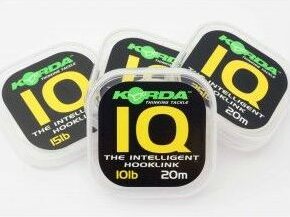
I love fishing fluorocarbon when surface fishing, because its light-refracting properties really help with what is one of the toughest presentations to get right. The Korda IQ is my pick for it.
The IQ is the perfect hooklength material on the top, particularly in the 10lb breaking strain. Korda have a great reputation for terminal tackle and this fluorocarbon absolutely continues that trend.
Used with a line grease it presents a floater beautifully on the top while still giving a stiff, reactive response to the strike. Since switching to it my hook holds have been noticeably stronger.
Being virtually invisible in the water, it has genuinely improved my surface results. It is a hooklink material rather than a mainline, but for floater work it is the one I trust.
Best suited to
Surface anglers who want a low-visibility floater hooklink.
Pros
- Virtually invisible in the water
- Stiff, reactive strike response
- Superb hook holds on the top
Cons
- A hooklink, not a mainline
- Best greased for surface work
Fox Submerge Sinking Braid
#5 For Long-Range Casting
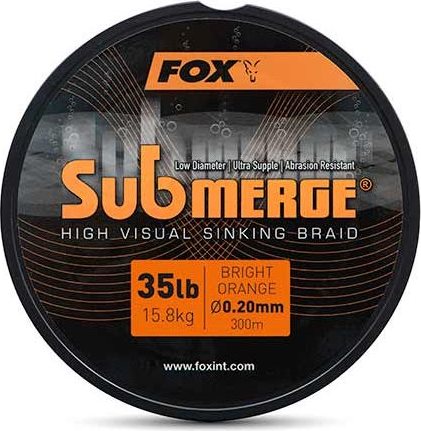
When I need to cast a long way, Fox Submerge is a braid I trust to get me there. At range there is no room for the bows and slack that kill bite indication, and braid's lack of stretch keeps everything tight.
What sets the Submerge apart is that it is slightly denser than a lot of braids on the market, so it sinks better and stays down out of the tow rather than lifting in the water.
It is a genuine quality carp mainline: it gets rigs out further than mono ever could, and it keeps me firmly connected to the end tackle so I feel every touch on the rig.
Like any braid it wants careful spooling and it is dearer than mono, and I would not fish it tight to snags. But for putting a rig a long way out and staying in touch with it, it is excellent.
Best suited to
Anglers casting long who need to stay in touch with the rig.
Pros
- Denser, so sinks better than most braids
- No-stretch contact at range
- Casts a rig a long way
Cons
- Priciest line here
- Not for fishing tight to snags
X-Line Fluorocarbon
#6 For Clear Water
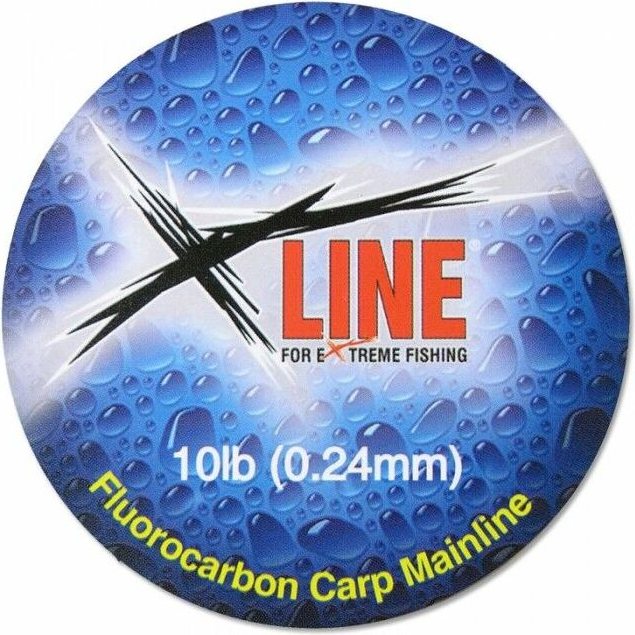
The X-Line fluorocarbon is a really popular mainline that offers a good balance of stretch and sensitivity alongside the sinking and light-refraction that fluorocarbon naturally brings. It is my choice when the water is clear.
Keeping things inconspicuous in clear water is genuinely tough, and this is where the X-Line earns its place: the light-refracting properties make it very hard for a wary carp to pick the line out.
It sinks well to keep the line off the deck and out of sight, and it comes on a 250m spool, enough to load a reel with a proper fluorocarbon mainline.
Fluorocarbon can be a touch trickier to knot than mono and costs a bit more, but with everything it brings on a clear, pressured water it gives the best possible chance of a bite.
Best suited to
Anglers fishing clear, pressured water where line shyness matters.
Pros
- Light-refraction hides it in clear water
- Sinks the line out of sight
- Big spools load two reels
Cons
- Trickier to knot than mono
- Dearer than mono
Korda Subline
#7 Best Sinking Line

Team Korda designed the Subline to cope with the extreme situations a carp session can throw up, and it is the mono I turn to when the swim is unforgiving.
It is a great choice for fishing near snags or any other highly abrasive feature, where a standard mainline would give up. The heavy-duty material shrugs off the rough treatment that comes with holding a fish out of trouble.
That toughness comes with a bit more weight, which is no bad thing: it sinks well and pins down out of the way. Extreme situations sometimes call for extreme measures, and the Subline is one worth taking to fish with confidence.
It is heavier and thicker than a finesse line, so it is not the one for clear-water or long-range finesse work. But for snags and abrasion, it is exactly what I want on the reel.
Best suited to
Anglers fishing tight to snags or heavy abrasion.
Pros
- Heavy-duty abrasion resistance
- Sinks and pins down well
- Trusted around snags
Cons
- Heavier, thicker diameter
- Not for finesse or long range
What to look for in the best carp fishing lines?
It would be really easy to give a carte blanche answer that covers a generalist approach when choosing a carp fishing line. Carp fishing, however, covers a myriad of approaches that can differ quite considerably. As such the best carp fishing mainline will be dependant on what tactics you are looking to deploy.
The following questions are good to get the answers to before homing in on what carp fishing line to purchase:
Are you fishing in clear water?
If the water you are fishing is clear then the colour of your line will be a major factor in your choice. Without a shadow, in clear water, you need to be fishing with a clear mainline to reduce the likelihood of carp actually seeing your line and realising something is untoward.
In clear water, you may even want to consider the use of a fluorocarbon mainline. One of the benefits of fluorocarbon is its light-refracting properties and so could really help when the water is clear, particularly on a bright day.

Are you fishing in or near weed?
Similar to the answer on clear water, if you are fishing weedy water then line colour should also be a consideration. There are many green mainlines on the market today and these will be ideal if fishing in a weedy swim.
Although weedy areas could be lucrative, they are also fraught with challenges. Clever carp will often aim straight for a weed bed when hooked with an aim of burying itself as deep within it as it possibly can.
If you know that there are some large, deep weed beds on the water you are fishing, you will need to scale your line up a bit and look for a mainline that is higher in its breaking strain and maybe more abrasion-resistant.

Are you fishing near snags?
Similar to weed, snags can be great fish-holding areas as carp will see them as a safe haven. Again, once hooked, carp will make a beeline straight towards the nearest snag and quite often it's best to fish 'locked up and have a hook and hold approach when you are in.
This basically means that once hooked, no line will be taken from your reel so you need to pounce on the first indication of a take or your beloved rod and reel will end up in the drink. If you are fishing very close to snags we would recommend you use a bite alarm with snag ears attached as a form of added protection for your gear.
Once hooked and with the rod in your hand, again, you will need to attempt to not allow the carp to take line and effectively hold it in position with an attempt to get it to change its direction towards a safer area of the water.
This 'hold' approach can put a lot of pressure on your gear, particularly mainline and so a high breaking strain line with lots of abrasion resistance is the order of the day. In these circumstances, we would recommend you choose a braided mainline that has additional abrasion-resistant properties.
What distance do you need to cast?
Casting distance is an important consideration when choosing a mainline. If your tactics are swinging out a small lead along the margins, then a low diameter mono will be a good choice. If you are needing to blast a 5oz bomb over 120yards then you will need a line that can take this sudden strain.
If casting long distances, quite often it's good practice to use a shock leader to basically (as the name suggests) absorb the shock of the sudden strain exerted onto the line. Without this, lighter lines, could be prone to snap offs on the cast.
If your gear is at its casting limit, using braid as your mainline can give you an extra 10 or 20 yards or so. This is simply because there is less stretch and give in braid that would otherwise absorb some of the force used in the cast.

Are you needing a line for spodding and/or a marker float?
If you are looking to spool up a reel specifically for a marker or spod rod then strength and subtlety are the order of the day. Strength is obviously needed as casting a spod full of particles will easily snap a line that isn't up to the task.
Subtlety is required for a marker rod as the aim is to feel every undulation on the lakebed. For both spodding and marker floats, braid is very much the order of the day. Its strength and higher breaking strain will cater for most spodding jobs and its very low elasticity means you will feel more of the bottom contours through your rod tip.
To get the most out of braid, however, you have to make sure that it is spooled correctly. Check out the following video that provides some useful tips when spooling braid onto your reel:
Are you needing a carp line for surface fishing?
Floater fishing for carp can be an exhilarating tactic. It can also, however, be a difficult and frustrating tactic. Carp are harder to catch on the surface due to increased visibility and just generally how the bait and line are presented can be unnatural and challenging.
To give you the best opportunity of catching on top, the right fishing line is paramount. The best carp fishing line for surface fishing should be of the lowest diameter that you can get away with. Ideally, you should use a clear line that has light refracting properties tied to a relatively small carp hook.
We prefer to use a low-diameter fluorocarbon line for surface fishing to mitigate all of the challenges that succumb to it.
Top Tip: - If you grease your line, the buoyancy of the line will increase which will help keep all your line on top of the water and help prevent spooking.

Do you need a carp fishing line that can adapt to different situations?
So you may only have a couple of reels at your disposal, yet you may want to try a number of different tactics during a session or over a certain period of time. Having to change your line between sessions can be a real pain let alone quite costly.
If you find yourself in this situation then the best carp line will be one that is adaptable and can turn its hand to most circumstances. We recommend a monofilament line with a breaking strain of 15lbs. A dark brown or multicoloured (dark brown and green) line would suit most circumstances.
If you find yourself fishing clear water or wanting to fish on top then you can always apply a length of clear mono or fluorocarbon to the end of your line (at your required length) to suit this type of fishing.
Does spool size affect line choice?
Spool size, to a degree, will affect your choice of fishing line but more indirectly compared to the other factors mentioned. For example, if you are fishing a water where you need to cast 120 yards plus to be in with a shout then you may be fishing with a big pit reel.
Big pit reels have a huge line capacity and so you can afford to scale up the diameter of the line and still have the ability to cast miles! Likewise to the contrary, a smaller spooled reel may better suit a low diameter line to allow for more line on the spool.
Of course, the larger the spool on your reel the larger the spool of line you need to buy. If you are loading up 3 big pits then you will no doubt have to consider the purchase of a 1000 metre bulk spool.
To learn more about the different types of carp reels please check out our dedicated article here.
Monofilament
Pros
- Most common and widely used fishing line.
- The cheapest fishing line out of the 3.
- Naturally Abrasion-resistant.
Cons
- Thicker in diameter so easier for fish to see
- More stretch than the other line types affecting casting distance and hook set.
When to use: Mono is a great line to pick for all-round use as it's versatile and more cost-effective than braid and fluorocarbon. We would use mono for normal, general-purpose carp fishing and use it on the majority of our fishing trips where nothing, more specialist, is required.
Braid
Pros
- Very little stretch and memory allows for the ability to cast further.
- Most sensitive of the 3 lines allowing for great bite indication
- Very strong
Cons
- More expensive than mono
- Can be prone to slipping off the spool in very cold conditions
- Can cause more tangles if not spooled correctly.
When to use: We use braid when we are looking at fishing surplus of 120 yards as its strength and lack of elasticity allows for maximum casting efficiency. At these distances, slow bite indication can be a factor and the use of braid really helps with this.
We also like to use braid when spodding as, again, its strength helps handle very heavy spods. The sensitive nature of braid also makes it an ideal carp line to use with a marker rod to map out your swim.
You really can feel every knock on the rod tip when using braid which is really handy when trying to pinpoint an underwater feature.
Fluorocarbon
Pros
- Great light refracting properties making it very hard to see in water.
- Good for bottom fishing as sinks really well
- A lot thinner than mono
Cons
- More expensive than mono
- Knots don't tie as nicely compared to mono and braid
- Can be prone more to twists and tangles
When to use: We like to use fluorocarbon when fishing in clear waters due to its light-refracting properties. It can be a great line to use if the fish on a particular water are easily spooked with the presence of line in the swim.
We also like to use fluorocarbon when surface fishing in conjunction with a good line grease to ensure the line floats.
What colour line is best for carp fishing?
As discussed previously in this article, the colour of your carp line should really match the particular features of the water body you are fishing. For example, if you are fishing weedy water, use a green mainline, if the lake bed is particularly silty then a brown line will be the order of the day.
In clear water, a clear line should be used, and so on and so forth. The ultimate aim when choosing a particular coloured fishing line is to make your presentation as inconspicuous as possible.

What pound line breaking strain should I use for carp?
This is a simple question to answer. Always choose the lightest line you can get away with without compromising fish safety.
Fish are wise old creatures and anything that looks or feels unnatural will cause them to become wary and in some cases stop feeding in a particular area they are cautious about.
For this reason, the thinnest line will be the best choice however you shouldn't use a thin line next to snags for example. The average carp angler will be using line with a breaking strain varying from 10lb and 15lb, with a 12lb mainline being a good, all-round line to use in most circumstances.
For a snaggy swim, you should scale up to a line of 20lb plus breaking strain. And to the contrary, if you are fishing for smaller carp in a snag-free water or maybe even float fishing for carp then you may even want to go as low as 6-8lb breaking strain.
As a final note, your choice of breaking strain should also go hand in hand with the correct carp rod and indeed carp rod & reel combo for the situation you are fishing. What we mean by this is that you wouldn't use a 3.5lb test curve rod and a big pit reel with a 6lb mainline. So make sure your rod, reel and line are all well balanced.
Carp Line FAQs
Still deciding which line to spool up?
These are the questions I would settle before buying.
How much line do I need to spool a big pit reel?
A big pit reel holds a lot of line, so most anglers need a bulk spool. A 1000m spool comfortably loads two or three big pits, which usually works out cheaper per reel than buying separate 300m spools.
For a standard-sized reel, a single 300m spool is normally plenty for one reel with backing underneath.
Can I use one line for both spodding and my main rods?
It is better to keep them separate. Spod and marker work wants a dedicated braid for the strength to fire heavy loads and the low stretch to feel the lakebed, which is not what a playing mainline needs.
On the fishing rods a mono or fluorocarbon mainline gives the forgiving stretch and abrasion resistance that protect a hooked fish, so a rig line and a spod line really are two different jobs.
How often should I replace my carp mainline?
Mono is worth refreshing roughly once a season with regular use, sooner if it has taken a battering on gravel or snags. Line that has gone stiff, faded or is showing abrasion has lost its edge and should be changed.
Braid lasts a good deal longer as it does not degrade the same way, but it is still worth checking the last few yards for wear and re-tying regularly.
Do I need a shock leader with my mainline?
For big casts with a heavy lead, yes. A shock leader absorbs the sudden force of the cast and stops a lighter mainline cracking off, which protects both the rig and anyone nearby.
At shorter range with a lighter lead it is less critical, but for distance work with a 4oz or 5oz lead a leader is sensible insurance.
Final Thoughts
If you want to succeed in carp fishing then every aspect of your tackle needs to be thought about. One of the biggest aspects of your gear to ponder has to be what carp fishing line you will use.
If you get this wrong, you will either lose more fish than you land or just won't simply hook any in the first place.
Hopefully, this article has given you some pointers into what to look for in the best carp fishing line and more importantly what fishing situation to use each type in.
Tight Lines! (no pun intended!)
Related Articles...

Best Carp Rods
In this article, we will take a look at the best carp rods for a whole host of different carp fishing applications. We will advise you on what features to look for when choosing the best carp rod and provide some suggestions based on years of experience and extensive research.

The Best Fluorocarbon Line for Carp Fishing
Fluorocarbon is the latest trend amongst carp anglers. Checkout this handy guide to help decide on the best fluorocarbon line for carp fishing.

Best Big Pit Reels
Big Pit Reels are the big guns of the fishing world, they are literally casting Howitzers. Read this article to find the best big pit reels available today.