
The Best Feeder Reels For Coarse Fishing (Complete Guide On Match & Method Feeder Reels) 2026
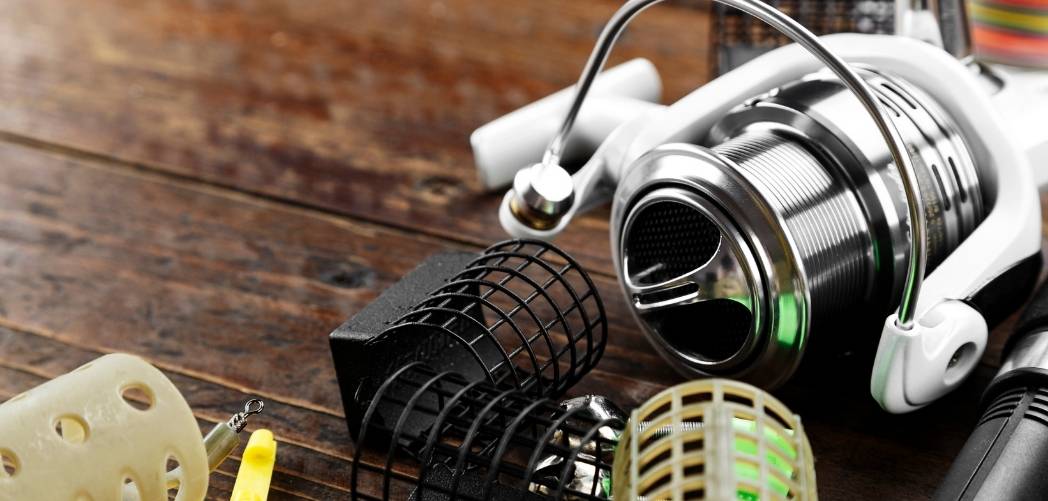
So if you are going to be casting loads and catching big? You're going to need a real workhorse.
The best feeder reels will give you some serious casting and pulling power all in one solid package.
We've tried the best and the worst over years of fishing and can tell you quality is an all-important factor. It's not just about picking the best brand at the highest price and expecting the best quality.
A number of factors go into the best feeder reels. In this article, we'll look at a couple of really good options that should help to get a bend in your rod and plenty of fish on the bank.
Quick Answer
The Matrix HX Pro Feeder Reel is my top overall pick because it is built specifically for feeder work in the bigger 5000 and 6000 sizes, and its sealed magnesium body shrugs off the grit and wet that kill lesser reels.
For better value, my starting point would be the Preston Invictus Reel. The table below matches each reel to the budget level and style of feeder fishing where it makes most sense.
| Best for | Reel | Best suited to | |
|---|---|---|---|
| Premium (£100+) | |||
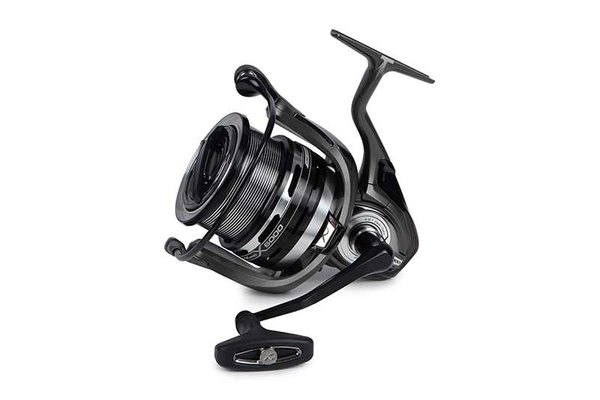 | Best Overall | Matrix HX Pro Feeder Reel | Anglers stepping up to bigger feeders on rivers and large stillwaters who want a properly sealed big-size reel that shrugs off groundbait and grit. |
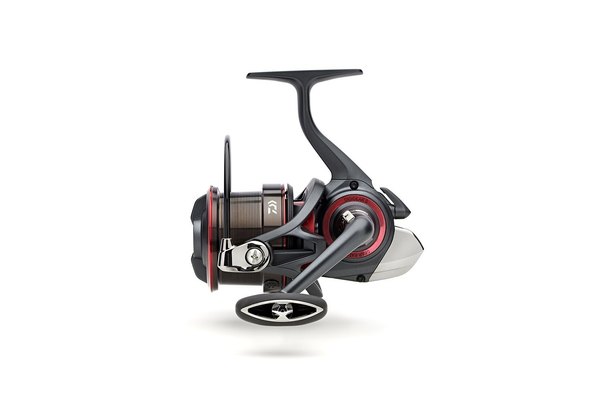 | Best Premium | Daiwa 21 Tournament Feeder QD Reel | Anglers who fish the feeder seriously all season and want a sealed, long-cast flagship with a genuine quick drag on it. |
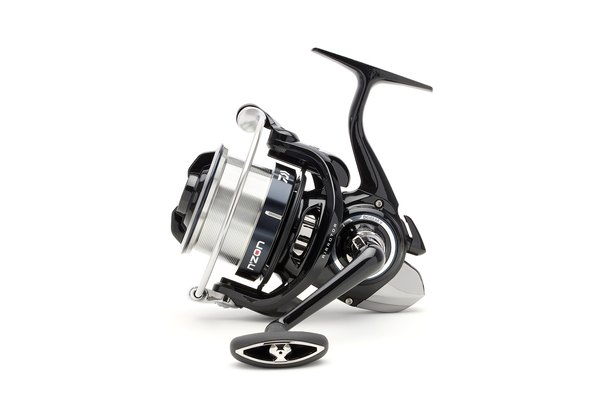 | Best for Distance | Daiwa 24 N'Zon Plus Distance Reel | Anglers whose feeder fishing is defined by range, wanting a long-stroke spool and geared-down winding power for big feeders at the far bank. |
| Mid-range (£60-£100) | |||
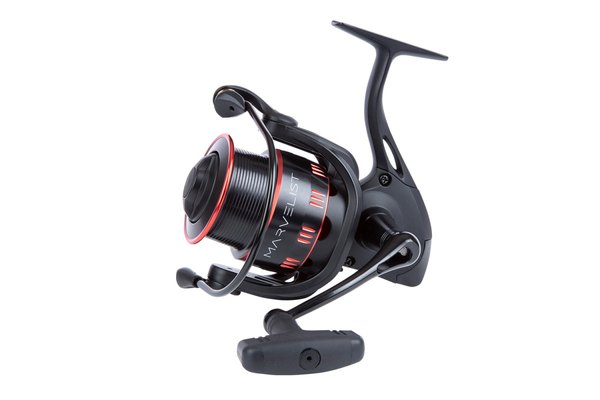 | Best All-Rounder | Nytro Marvelist Power Feeder Reel | Anglers who want a single reel for every feeder situation, from commercial pegs to fast-flowing rivers, with a World Champion behind the design. |
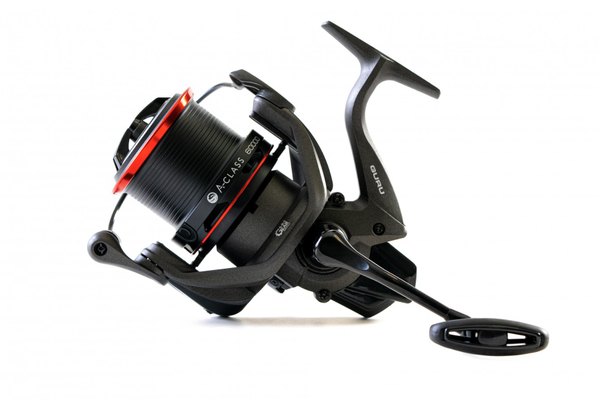 | Best Value Long-Range | Guru A-Class 6000D Distance Reel | Anglers who need a big-spool reel for long chucks on open water but are not willing to pay flagship money to get one. |
| Budget (under £60) | |||
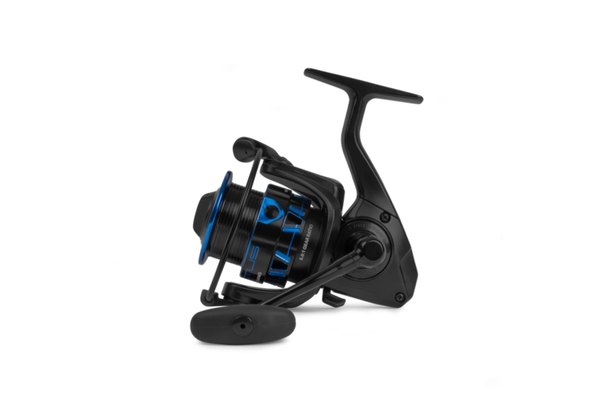 | Best for Commercials | Preston Invictus Reel | Anglers fishing commercial feeder pegs on a tight budget who want the long-range 520 rather than the little 320 waggler reel. |
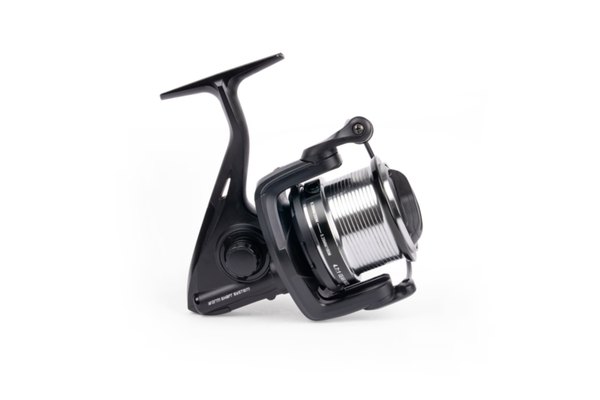 | Best Budget | Korum Zelos Distance Reel 6000 | Anglers chasing big fish at range on rivers and open stillwaters who want genuine distance specs without a big outlay. |
What Are The Different Types Of Feeder Fishing Reel?
When looking at feeder reels, you'll no doubt be presented with a huge array of choices. Aside from common features, you'll find various innovations.
Feeder reels are designed to cast out some huge weights (particularly if method feeder fishing) and so have to be pretty substantial in build.
Because sometimes you maybe casting a long way, you'll find a variety of spool shapes on feeder reels, all of which should allow you to store a lot of line.
When it comes to the different types of feeder fishing reel, you'll find various big brands and some lesser-known variations with most offering differing alternatives of size, features and price.
Some anglers use baitrunners as a feeder reel particularly if method feeder fishing. The baitrunner function can come in handy as takes can come quickly and ferociously at times.
The extra 'security' feature of a baitrunner can be important to prevent an unwanted farewell to your dearly beloved rod & reel.
Some feeder reels come with a front drag and others with a rear clutch. Both do the same job and so this is often down to personal preference.
Whatever reel type you choose, the best feeder reels need to be able to cast a decent weight accurately and often.
They also need to be of a sufficient quality to handle powerful fish such as carp or barbel.

What To Look For In The Best Feeder Fishing Reel?
The best feeder reels will have a few key qualities you want to look at. Let's take a quick look now and see what's what.
Feeder Reel Spool Size
In some fishing situations you may want to cast a long way. The spool size is vital in making this easy. A big spool will allow you to carry much more line which in turn allows you to cast further naturally.
This is down to a number of reasons but mainly because a) there is more line to be able to achieve the distance in the first place and b) there would be less friction on a fuller spool allowing for greater distance.
Also a bigger spool allows for an optimised line lay allowing line to peel off more freely.
With a big spool, the bail arm has to rotate less for each foot of line. Less rotation per foot ensures line can be wound onto the reel much quicker and more easily.
If it goes on easy, it comes off easy too allowing you to achieve huge distances with a decent overhead thump.
A larger spool also allows you to get more line in quicker. Useful for when you are baiting up, or more optimistically battling a decent fish.
A Substantial Winding Handle
It's no secret that the best feeder reels need to be well built and, in some circumstances, heavy duty. You are going to need all the pulling power you can get.
One way to achieve this is with a decent-sized winding handle. We look for features such as chunky winding knobs and slightly longer-than-usual winder arms.
Feeder Reel Retrieve Ratio
While helped by the bigger spool, your retrieve speed is also dictated by the reel's internal gearing. Keep a good look out for substantial retrieve ratios. As a minimum we would suggest 4.0:1.
Build Quality
When casting heavy, your reel is going to take quite a lot of punishment. The forces generated when throwing out a fully loaded feeder are colossal, so you will need something that will take all you can throw at it (or with it). Look for solid metal parts and a thick, robust design that will be reliable.
Another feature to look for in the build of the reel is a decent line clip. Feeder fishing requires accuracy and a line clip can help no end. If you are fortunate enough to have the fish feeding in your swim with bites a plenty, then you will no doubt be casting often.
If you are using a line clip for accuracy then it needs to be of sufficient quality to hold on many casts. The line clip needs to be made of a solid material, ideally metal.
Drag
When your arm is aching as you try and battle a decent sized fish the last thing you want to be doing is messing about with the drag. The easier it is to reach the drag, the better.
We find that the best feeder reels have a large and easy to reach drag. We prefer a front drag for feeder fishing but this is just personal preference.
Some of the best feeder reels come with a speed drag facility that basically allows your reel to go from rock sold to an easy, smooth out-take of line in a couple of clicks.
By being able to fine-tune the pressure on the fish quickly and easily, you'll give yourself the best possible chance at getting it into your landing net.
Value for Money
We are all for reducing the cost where we can. When it comes to choosing the best feeder reel, our advice is this… Don't 'cheap out'.
Along with a great feeder rod, your reel is one thing that you will be using a lot. If it breaks or isn't up to the job that will be the end of your day.
For the money, consider the price-per-use and see it as an investment… If it works well, you'll use it more often. It's a false economy to go cheap, as you may very well end up paying twice!
What is the Best Method Feeder Fishing Reel?
Fishing the method feeder can put a lot of stresses and strains on your fishing gear. At times, if you use 'the method' in the right circumstances you can get the fish into a real feeding frenzy.
If you are fortunate enough to be in this situation then your reel will be constantly 'at it'. Everything has to work in tandem and the build of the reel needs to be solid but also well balanced.
As mentioned at the beginning of this article, the best feeder reel we have used (and we have used many) is the Preston innovations intensity feeder reel. For method feeder fishing this is no exception and , if anything, is even more recommended.
The reel scores really high in all areas and really is a solid performer. It ticks all the boxes needed for a method feeder reel and we can't praise it enough.
Preston is becoming extremely well known for producing some really great coarse fishing gear, and this reel is certainly no exception.
What is the Best Feeder Reel Line?
It would be a terrible shame to invest in a high-quality feeder reel, only to be let down by poor quality line. By choosing the best feeder line, you'll allow your reel to release its full potential and likely catch more as part of the deal.
We've tried a fair few lines in the past and we've found the best line for feeder fishing is the Dave Harrell Pro Feeder Line.
This monofilament line has a really great stretch factor, making it perfect for absorbing some of the shock when hurling a substantial weight over the horizon.
It is available in a range of breaking strains and 300-metre spools, more than enough line to fill a large spooled feeder reel. The line is also a great choice for spooling your float fishing reel, as it sinks. You can check this line out here...
The Best Feeder Reels Reviewed
Matrix HX Pro Feeder Reel
#1 Best Overall
Matrix launched the HX Pro as a 3000 and a 4000, and it was anglers asking for something bigger that produced the two sizes in front of me here. Their own line is that the 5000 and 6000 were developed for feeder fishing with bigger rods, for large feeders at distance and for river work. That is this guide's brief written out in a sentence, and it is why this reel takes my top slot.
On the bank the thing I notice first is the line lay. A worm drive and slow oscillation stack the line evenly across the spool, and evenly stacked line is what leaves cleanly on a long cast instead of snatching off in coils. The easy-reach spool means trapping line on the drop is no stretch even on the 6000, and the sleek one-piece bail arm has nothing to catch a loop on. The 5000 brings back 90cm a turn, the 6000 96cm, so a long chuck comes home without endless winding.
The specs that matter most to me are the body and the sealing. Matrix use an ultra-light magnesium body and a TLS triple sealed body to keep moisture and groundbait out, which is the exact grief that kills feeder reels: wet hands, a spray of groundbait, grit finding its way into the gears. Behind that sit 10+1 ball bearings, an SDX multi disc drag system to help play fish, and a carbon reinforced rotor with a minimum resistance rotor brake. The 5000 holds 150m of 0.26mm and the 6000 150m of 0.28mm, at 408g and 428g in turn.
The honest catch is that big is all this listing is. The 5000 and the 6000 are the only two sizes stocked here, and an angler flicking a small method feeder across a snake lake would want the smaller 3000 or 4000 instead, which means shopping elsewhere. Magnesium keeps the weight down for the class, but 408g still wants a proper feeder rod underneath it rather than a light waggler blank.
Best suited to
Anglers stepping up to bigger feeders on rivers and large stillwaters who want a properly sealed big-size reel that shrugs off groundbait and grit.
Pros
- Triple sealed magnesium body keeps groundbait and wet out
- Worm drive and slow oscillation lay line for long casting
- 10+1 bearings with an SDX multi disc drag
Cons
- Only the big 5000 and 6000 are stocked here
- Still 408g upwards, so it needs a proper feeder rod
Daiwa 21 Tournament Feeder QD Reel
#2 Best Premium
Daiwa do not hedge about this one. Their own description calls it their best ever big feeder reel, and they hang the claim on two things: Magsealed and the shallow LC Long Cast spool. It takes the premium slot here on merit rather than on badge.
Daiwa fit their Quick Drag to it, and that is the feature I'd miss most going back. Twin HIP line clips let me pin two distances at once, which matters when I am alternating between a near line and a far one. The one-touch folding handle drops flat, and since most feeder reels live on the rod between trips, that is a real convenience rather than a spec-sheet line.
The build is where the money went. A Zaion body carries a DS5 Air Rotor and an Air Bail, with Tough Digigear inside and Twistbuster 2 on the roller. Magsealed is the one I rate most: Daiwa's seal against the water and muck that finish off lesser reels, which is precisely what an all-weather feeder reel needs. Daiwa built it around the 25mm configuration of the first Cast'izm and following the TDR25 Distance, so the long-cast pedigree is not new to them. A spare spool comes supplied.
The honest catch is proportion. This is comfortably the dearest reel in the guide, and it is a lot of reel for an angler who fishes the feeder a handful of times a year: the Korum or the Preston would cover those trips happily. The shallow LC spool is a specialist's pick too, geared to launching a feeder rather than holding a deep reserve of line.
Best suited to
Anglers who fish the feeder seriously all season and want a sealed, long-cast flagship with a genuine quick drag on it.
Pros
- Magsealed internals shut out water and muck
- Quick Drag moves from free spool to locked in half a turn
- Twin HIP line clips and a spare spool supplied
Cons
- Comfortably the biggest outlay in this guide
- Shallow long-cast spool is a specialist choice
Daiwa 24 N'Zon Plus Distance Reel
#3 Best for Distance
Casting a big feeder a long way is a specific problem, and this reel exists to solve that one problem. Daiwa put it plainly: where distance feeder work is the challenge, especially with bigger set-ups, the 24 N'Zon Plus Distance hits the mark. Everything about it points that way, which is why it holds the distance slot instead of the all-round one.
The 25mm LC Long Cast spool is the heart of it. A long stroke and a two-edged spool lip meter the line off in tidy coils at a micro level of resistance, and that is what buys the extra yards. A spring-loaded HIP High Impact Line Clip pins the distance so every feeder lands on the same spot, and the QD drag gives a choice between a running spool for savage rip-round bites or a drag properly engaged, switched in less than a single turn of the knob.
Daiwa geared it down deliberately to 4.7:1, which sounds slow until a loaded feeder is coming back from a long chuck: the low ratio multiplies winding power, and it still returns up to 96cm per handle turn because the spool is so wide. Digigear 2 and 4BB handle the load, the Air Bail and Air Rotor keep the front end solid, and body and rotor are the high precision composite carbons Zaion and Zaion V. The one-touch folding handle drops flat for the holdall.
The catch is the heft. Daiwa quote 450g, the heaviest of the reels here that publish a weight at all, and that is the payoff for a long 25mm stroke spool and a body that will not flex. It also runs on 4 bearings where cheaper reels here offer 6+1, and while bearing count is a crude measure on its own, an angler expecting a glassy premium feel should know the number before buying.
Best suited to
Anglers whose feeder fishing is defined by range, wanting a long-stroke spool and geared-down winding power for big feeders at the far bank.
Pros
- 25mm LC spool releases line cleanly for maximum distance
- Geared down to 4.7:1 yet still 96cm a turn
- Quick Drag and a spring-loaded HIP line clip
Cons
- At 450g, the heaviest reel in this guide
- Only 4BB where cheaper reels here give 6+1
Nytro Marvelist Power Feeder Reel
#4 Best All-Rounder
Former World Champion Tommy Pickering had a hand in designing this one, and it shows in how little it specialises. Nytro reckon the Marvelist Power Feeder covers most, if not all, feeder fishing situations, and that is exactly the job I want from an all-rounder: commercials or natural venues, flat stillwater or a pushy river, without swapping reels mid-season.
Three sizes run 3000 through 5000, and the medium-shallow aluminium pop-off spool takes mono or braid without a bulking-out job underneath. A spare spool comes in the box, so a mono spool and a braid spool can travel in the same bag. The 4.9:1 gearing neither crawls nor snatches, and the micro-adjustable multi-disc front drag sets fine enough for a light hooklength.
Nytro say they designed these reels to saltwater standards, and the high-strength aluminium body with a solid stainless steel main shaft is what that means in practice: a case stiff enough to keep the gears in mesh when a fish is pulling hard. There are 6+1 ball bearings, a sealed one-way clutch, an S-curve crosswind oscillation system, a twist-free line roller and two oversized round metal line-clips for pinning a range.
My gripe is the paperwork. Nytro publish no weight and no line capacity for any of the three sizes, so an angler trying to balance one against a particular feeder rod is going in blind. The medium-shallow spool is honest about itself too: fine at sensible range, but not the tool for the very longest chucks, where the dedicated long-cast spools in this guide pull ahead.
Best suited to
Anglers who want a single reel for every feeder situation, from commercial pegs to fast-flowing rivers, with a World Champion behind the design.
Pros
- Aluminium body built to saltwater standards
- Pop-off spool takes mono or braid, spare included
- Three sizes and a micro-adjustable multi-disc drag
Cons
- No published weight or line capacity figures
- Medium-shallow spool is not a distance specialist
Guru A-Class 6000D Distance Reel
#5 Best Value Long-Range
Long-range feeder gear has a habit of costing, and the A-Class 6000D is Guru's answer to that. It is the biggest of a four-model range, pitched at anglers who need extra line capacity, power and casting performance for long-range feeder fishing without buying at the very top of the market.
The larger profile is the whole point. A bigger spool means more line and a longer, freer coil off the lip, which is what handles big feeders on large natural waters and the wide open-water commercials where the fish sit beyond a smaller reel's reach. An infinite anti-reverse system and a smooth multi-disc drag give steady, controlled pressure instead of the lurching an on-off clutch produces, and the soft-touch T-shape handle knob stays comfortable over a long wind.
Guru have spent the budget where it shows: an aluminium spool and handle, a thick wire bail arm that resists a bend, and a lightweight body and rotor so a big reel does not feel like a brick on the rod. The 6000D is the deliberate distance choice within a range that also runs 3000, 4000 and 5000.
What frustrates me is what Guru leave out. There is no published gear ratio, no bearing count and no line capacity figure anywhere on the listing, and those are three of the numbers I would normally use to match a reel to a rod and a job. It is a big reel too, so anyone fishing a short-range peg is better served by a smaller model in the same family.
Best suited to
Anglers who need a big-spool reel for long chucks on open water but are not willing to pay flagship money to get one.
Pros
- Larger profile handles big feeders at long range
- Aluminium spool and handle, plus a thick wire bail arm
- Infinite anti-reverse with a smooth multi-disc drag
Cons
- No published gear ratio, bearing count or line capacity
- Too big to balance on a short-range peg
Preston Invictus Reel
#6 Best for Commercials
Get the size right and this is a lot of commercial feeder reel for modest money. Get it wrong and it is not a feeder reel at all. The 520 is the one I'd be reaching for: Preston describe it as designed for long-distance casts of 60 to 80m and ideal for feeder fishing on both natural and commercial venues. The 420 under it is a genuine all-rounder that Preston pitch at commercial feeder setups and natural waggler work alike, so that one is no mistake either. The little 320 is the trap, a waggler reel built for shorter casts up to 40m.
That 60 to 80m brief is the reach a commercial angler actually needs, covering the far bank on most day-ticket waters. A high-quality metal line clip pins the range so every cast lands on the bait, and the micro-adjustable front drag sets fine enough for a light hooklength to a big carp.
The precision-machined aluminium spool matters most for casting: a true, hard lip that lets line leave cleanly. The body is compact and light, the handle a single, and the gearing smooth and reliable rather than clever.
The trade-off is that body. It is impact-resistant graphite, not the aluminium or magnesium of the dearer reels here. Graphite takes a knock well and keeps weight down, but it flexes more under load than metal. Preston publish no gear ratio or bearing count either.
Best suited to
Anglers fishing commercial feeder pegs on a tight budget who want the long-range 520 rather than the little 320 waggler reel.
Pros
- The 520 is built for 60 to 80m feeder casts
- Precision-machined aluminium spool casts cleanly
- Micro-adjustable front drag and a metal line clip
Cons
- Graphite body flexes more than metal under load
- Easy to buy the wrong size: the cheapest 320 is a waggler reel
Korum Zelos Distance Reel 6000
#7 Best Budget
At 390g the Zelos Distance 6000 is the lightest reel here that publishes a weight, and it still sits in the budget tier. Korum call it the ultimate power distance feeder reel for specimen anglers, and the spec sheet backs the boast up.
It earns its slot on a fast-moving river or an open-water spot on a stillwater, the two places Korum built it for. The 4.7:1 gearing brings back 90cm a turn, enough to keep pace with a feeder swinging round in the current, and two line friendly casting line clips pin a range without shredding the mono. Korum fit a quick drag to it as well.
The internals beat the bracket. There are 6+1 stainless bearings, a worm shaft system for line lay, an anti twist line roller and a floating line rotor guard keeping line out of the works. It holds 200m of 0.26mm, and the machined reel handle wears a soft touch knob.
The catch is that it does one job. Korum aim it squarely at specimen anglers fishing at range, so on a short commercial chuck it is far more reel than the peg wants, and a big 6000 body feels wrong on a light feeder rod.
Best suited to
Anglers chasing big fish at range on rivers and open stillwaters who want genuine distance specs without a big outlay.
Pros
- 390g, the lightest here that publishes a weight
- 6+1 stainless bearings and a worm shaft system
- Quick drag plus two line friendly casting clips
Cons
- Aimed at specimen range work, overkill on short pegs
- Big 6000 body unbalances a light feeder rod
Feeder Reel FAQs
Still deciding which reel to put on the feeder rod?
These are the questions worth settling first.
What size reel do I need for feeder fishing?
A 3000 or 4000 covers most commercial and short-range feeder work and balances nicely on a lighter feeder rod. Once bigger feeders, long casts or flowing rivers come into it, a 5000 or 6000 is the better call: more line on the spool, a wider lip for cleaner casting, and gears with the power to drag a loaded feeder home. Matrix built the HX Pro in 5000 and 6000 for that exact reason, and the Guru A-Class 6000D and Korum Zelos Distance 6000 sit in the same bracket.
Do I need a baitrunner for feeder fishing?
Usually not. A baitrunner earns its place when a rod sits in a rest with the bail closed and a big fish can bolt off with the lot, which is specimen and carp territory. Feeder fishing is normally an active business: the rod gets picked up between casts and bites are hit off the tip. What matters far more is a drag that can be adjusted in a hurry, which is why quick-drag systems like the QD on the two Daiwas and the quick drag on the Korum Zelos are worth having. Half a turn of the knob moves from a free-running spool to a locked one.
Is gear ratio or retrieve rate the number that matters?
They are not the same thing, and retrieve rate is the more useful figure. Gear ratio counts how many times the rotor turns for one turn of the handle, while retrieve rate says how much line actually comes back, which depends on spool diameter too. The Daiwa 24 N'Zon Plus Distance illustrates it well: a geared down 4.7:1 sounds slow, but the wide long-cast spool still returns up to 96cm per handle turn. A lower ratio trades outright speed for winding power, and winding power is what a loaded feeder at range asks for.
Should I use mono or braid on a feeder reel?
Mono suits most feeder fishing. It stretches, and that stretch is a useful cushion when a fish lunges at the net against a stiff tip. Braid comes into its own at long range and on rivers, where near-zero stretch shows up delicate bites that mono would swallow. Braid does need a spool suited to it, which is why a reel like the Nytro Marvelist Power Feeder specifies a pop-off spool for mono and braid alike. The common answer is to load one spool with each and swap as the venue dictates.
Final Thoughts
When it comes to choosing the best feeder reel, it is very much a case of 'buy cheap, buy twice'.
Trust us, with a cheap reel, when the gears strip mid-cast you can say goodbye to your rig (and maybe your index finger… we've got the scars to prove it!).
Feeder reels are worth every penny, your casting and therefore your catch rate will be vastly improved, and you'll be able to feel quality with the first cast. Try it and see for yourself.
Thanks for reading.
Tight Lines!
Related Articles...

Best Float Fishing Rods
In this article we are going to look at exactly what goes into the best float fishing rods and how you can make the best choice.

Best Feeder Rods
This article runs through some essential features found in the best feeder rod for coarse fishing that should help you up your catch rate significantly.

Best Fishing Power Banks
This article details 5 of the best fishing power banks on the market today from small, portable power banks, to large heavy-duty power packs.