
The Best Landing Net Handles for 2026
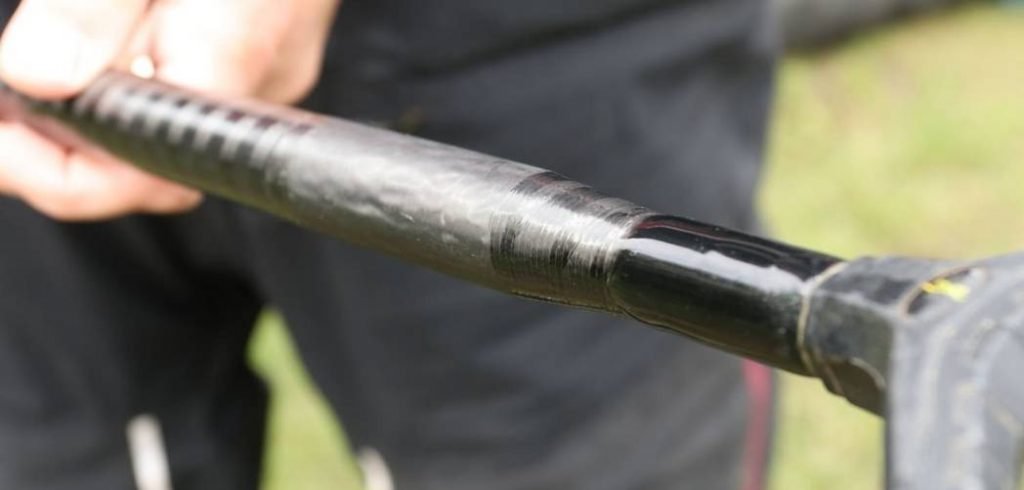
What is the best landing net handle for fishing? This is a question that gets asked more than you thought it would.
The reason for this is that there are so many different types on the market with differing lengths and materials.
The best landing net handles are those that are just the right length for the type of angling you are practicing.
The best handles also have to be made of a sufficient material that is both strong, sturdy, and lightweight.
In this article, we will take you through the 7 best landing net handles on the market today. These handles have all been tried and tested by ourselves for quality and have many positive reviews from all types of anglers.
We will also answer some of the most common questions asked about fishing landing net handles that we get asked often.
Quick Answer
The Guru Aventus 4m Plus 1m Net Handle is my top overall pick because its three sections, 1m extension and two double-pinned threads configure it from a light short handle to a stiff, powerful 5m, covering every netting situation.
For less money my starting point would be the Leeda Power Landing Net Handle. The table below groups the handles by budget, from competition systems down to a budget workhorse with a proper brass thread.
| Rank | Best for | Handle | Best suited to |
|---|---|---|---|
| Premium (£100+) | |||
| #1 | Best Overall | Guru Aventus 4m Plus 1m Net Handle | Serious match anglers wanting one handle that spans a short light setup to a full 5m. |
| #2 | Top for Reach | Matrix Horizon Ultra Slim 4.5m Handle | Silverfish and feeder anglers netting at long range who notice every gram at full stretch. |
| Mid-range (£45-£100) | |||
| #3 | Great Value Match Handle | Daiwa Ninja 4m Net Handle | Match and pleasure anglers after five working lengths without carrying a second handle. |
| #4 | Carp Specialist | ESP Onyx 6ft Net Handle | Carp anglers who want maximum rigidity off the rod in the classic 6ft length. |
| #5 | Great for Specimen Fishing | Drennan Super Specialist Twistlock Handle | Roving specimen anglers on rivers and high banks needing reach that locks at any drop. |
| #6 | Great Everyday Handle | Guru A-Class 2.9m Net Handle | Commercial and pleasure anglers wanting one dependable mid-length handle without premium spend. |
| Budget (under £20) | |||
| #7 | Best Budget | Leeda Power Landing Net Handle | Occasional and beginner anglers after a strong, honest handle at the cheapest end. |
The Best Landing Net Handles Reviewed
Guru Aventus 4m Plus 1m Net Handle
#1 Best Overall
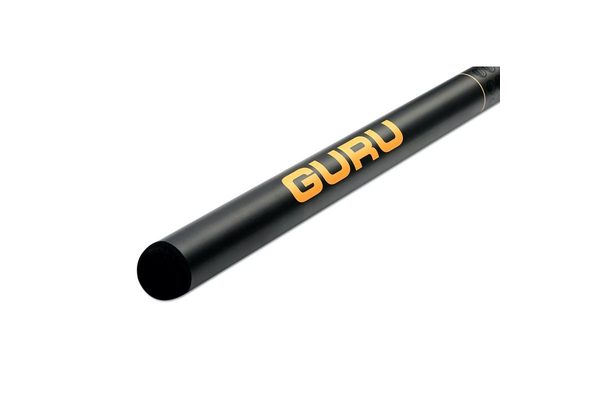
Really this is several handles in one, and that's why it takes the top spot. Three sections plus a 1m extension run the Aventus anywhere from a super-light short handle up to a full 5m for international-style venues and high banks.
The clever bit is the two double-pinned threads. One sits in the end section for a thin, light handle at any length, and the other sits in the second section for a much stiffer, thicker-supported setup with the power to scoop and steer big commercial carp through the water.
Every detail's thought through, from top-grade carbon with reinforced joints to the Floater Protection Cone in the butt of the extension. That cone keeps grit out on the bank and floats the back end when I'm wading, so the handle doesn't fill with water.
It's a competition tool at a competition price, and pleasure anglers won't touch half its combinations. For the most complete netting system in the guide, though, it sets the standard.
Best suited to
Serious match anglers wanting one handle that spans a short light setup to a full 5m.
Pros
- Configures from short and light to a full 5m
- Two double-pinned threads, thin or stiff modes
- Floater cone keeps the butt dry when wading
Cons
- Competition pricing
- More combinations than casual fishing needs
Matrix Horizon Ultra Slim 4.5m Handle
#2 Top for Reach
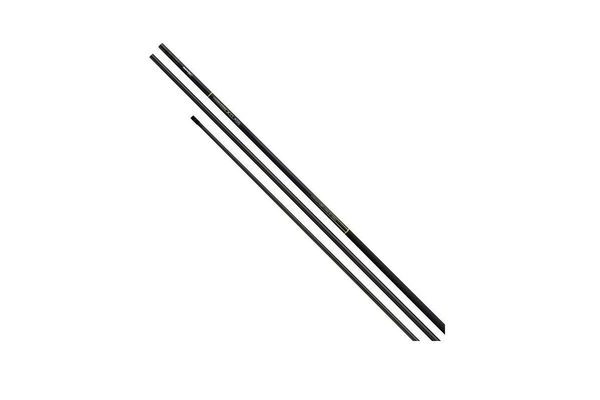
Reach is where lesser long handles turn into wet spaghetti, folding the moment a fish hits the cord. This one stays genuinely light at full stretch, a 4.5m blank in strong high-modulus carbon built to do exactly that.
That ultra-slim blank is designed around silverfish work, quick and precise for netting at speed, and the dual-length design fishes at 3m as well as the full 4.5m. One handle covers the near line and the far shelf.
Fittings match the blank's quality. Nickel-coated brass threads resist the wear that cheap alloy threads suffer, a unique printed rubber grip gives wet-handed control, and a protective plastic tube handles transport, which long thin handles genuinely need.
A slim silvers handle isn't the tool for hauling heavy commercial carp at range, where the stiffer Guru does better. For fast, long-reach netting, this is the one I'd pick.
Best suited to
Silverfish and feeder anglers netting at long range who notice every gram at full stretch.
Pros
- Light and slim at a full 4.5m
- Fishes at 3m or 4.5m
- Brass threads and a transport tube
Cons
- Slim build suits silvers over lumps
- Premium price for a specialist
Daiwa Ninja 4m Net Handle
#3 Great Value Match Handle
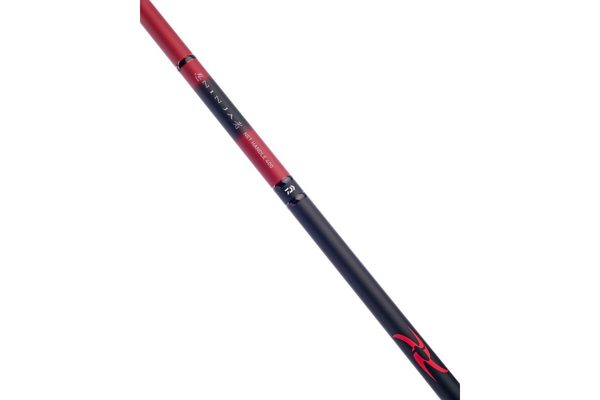
Multi-length handles usually carry a premium, so it's good to see the idea land at sensible money. Three sections and twin threads give the Ninja working lengths of 1m, 1.5m, 2.5m, 3m and the full 4m.
That flexibility's the everyday win. A short stiff setup nets in the margins, the full length reaches over rushes or fishes from high pegs, and none of it means carrying two handles to the peg.
Daiwa have kept it honest where it counts. The blank's super stiff rather than whippy, the whole thing weighs 420g at its full 4m, and the matt-finished full butt handles comfortably in wet hands.
It gives up the featherweight refinement of the premium handles, and the spec sheet's simpler throughout. As a do-everything match handle, it lands right in the value sweet spot.
Best suited to
Match and pleasure anglers after five working lengths without carrying a second handle.
Pros
- Five lengths from 1m to 4m
- Super-stiff blank, 420g at 4m
- Twin threads at a fair price
Cons
- 420g is solid rather than featherweight
- Simpler spec than the premium handles
ESP Onyx 6ft Net Handle
#4 Carp Specialist
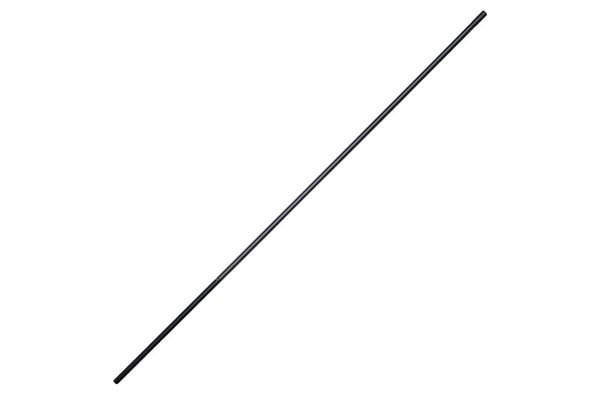
Carp netting punishes a soft handle, folding it the moment a heavy fish rolls over the cord at full stretch. This 6ft blank in light, rigid high-modulus carbon simply doesn't fold.
Six feet is the classic carp length for good reason. It's long enough to reach a wallowing fish off the rod, short enough to steer a big net one-handed while my other hand keeps the rod under control.
The finish serves function throughout, with an unground satin surface, a textured grip for wet hands and an anodised butt cap. A standard 3/8 BSF thread takes ESP's own Onyx 42-inch net or any spreader-block net on the market.
A fixed 6ft handle has no answer for high banks or long reaches, where the Drennan below extends further. For a rigid, no-nonsense carp handle, it's spot on.
Best suited to
Carp anglers who want maximum rigidity off the rod in the classic 6ft length.
Pros
- Light, rigid high-modulus carbon
- Classic 6ft carp length
- Standard 3/8 BSF fits any spreader net
Cons
- Fixed length
- No reach for high banks
Drennan Super Specialist Twistlock Handle
#5 Great for Specimen Fishing
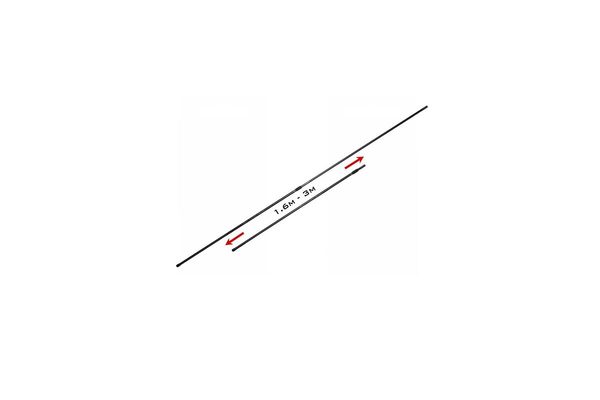
Bank height and marginal shelf change swim to swim on specimen waters, and a fixed handle can't answer that. This one extends anywhere from 1.6m to a full 3m, fixed solid with a quarter turn of its twist-lock mechanism.
That stepless adjustment is the trick the sectioned handles can't match. Whatever the drop to the water, from a barbel swim's high bank to a chest-high weir sill, it locks at exactly the length the moment needs.
The build's proper Drennan specialist kit. Super-strong high-modulus carbon gives extra rigidity, and a machined brass thread, pinned and reinforced, takes the most popular specimen and carp net heads.
Twist-lock mechanisms want a firm hand and a clean shaft to grip reliably, and 3m is the ceiling. For roving specimen work where every swim differs, nothing here is more practical.
Best suited to
Roving specimen anglers on rivers and high banks needing reach that locks at any drop.
Pros
- Locks at any length from 1.6m to 3m
- Quarter-turn twist-lock
- Pinned, reinforced brass thread
Cons
- Twist-locks need clean, firm handling
- Tops out at 3m
Guru A-Class 2.9m Net Handle
#6 Great Everyday Handle
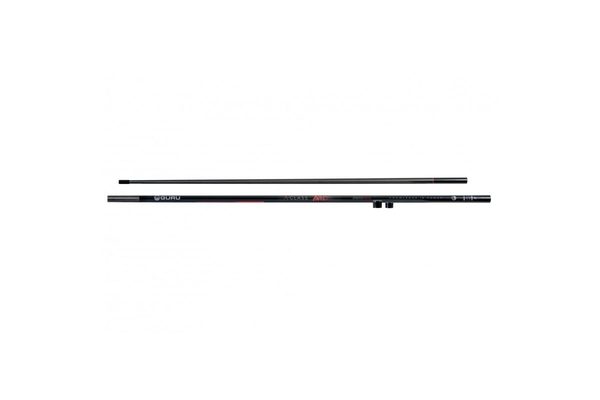
Guru's everyday handle carries proper engineering for the money, a 2.9m two-piece built for dependable work across commercials, naturals and matches.
The blank is ZERO400 tensile carbon with an ultra-fast taper, so it's light in the hand with the crisp, quick response that netting fish at speed rewards. The two-piece take-apart keeps transport simple.
Wear points are properly finished. Over-cap joints give a secure fit between sections, a stainless-steel threaded end section outlasts soft threads, and Guru's Super Glide and friction-free finishes keep the sections sliding in all conditions.
At 2.9m it lacks the reach of the 4m-plus handles, and there's no multi-length trickery. As one dependable handle for the vast middle of UK coarse fishing, it's very well judged.
Best suited to
Commercial and pleasure anglers wanting one dependable mid-length handle without premium spend.
Pros
- ZERO400 carbon, fast taper
- Stainless thread outlasts soft fittings
- Two-piece transport convenience
Cons
- No length options
- 2.9m reach only
Leeda Power Landing Net Handle
#7 Best Budget
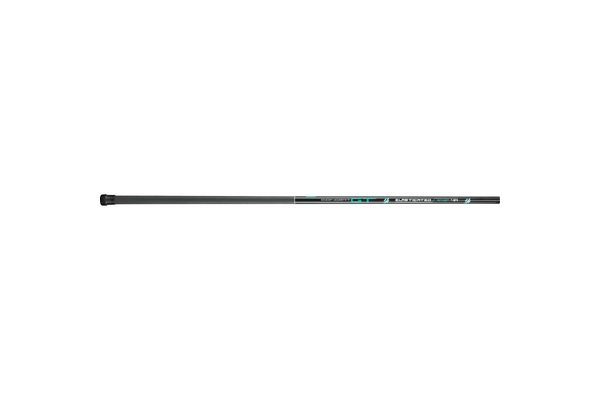
What kills a cheap handle is the thread, and that's exactly where the money goes here. Leeda fit a pinned brass thread, the same fitting philosophy as handles four times the price.
That matters because a net handle's job is simple and its failure point predictable. Soft, glued threads strip and work loose, while a pinned brass thread keeps the net head solid through seasons of screwing on and off.
The Power range is built from quality materials for strength and reliability, pitched at exactly the angler who wants to land fish without studying a specification sheet first.
The 2.5m and 3m versions are each fixed-length, with no carbon exotica and no refinements at this end. As a strong, honest handle in its in-stock 3m version, it does the only job that matters.
Best suited to
Occasional and beginner anglers after a strong, honest handle at the cheapest end.
Pros
- Pinned brass thread at a budget price
- Strong, simple build
- Cheapest handle in the guide
Cons
- No length adjustment
- Basic spec throughout
Landing Net Handle FAQs
Still choosing a handle?
These are the questions I would settle before buying.
What length landing net handle is best?
It follows the fishing: 1.8m (6ft) suits carp anglers netting off the rod, 2.5m to 3m covers most coarse and specimen swims, and 4m-plus earns its keep for match anglers netting at range or fishing high pegs.
Multi-length handles like the Daiwa Ninja and Guru Aventus sidestep the choice by covering several lengths in one.
Do all landing nets fit all handles?
Almost universally, yes: UK nets and handles share the standard 3/8 BSF screw thread, so any net head in this guide's sister articles fits any handle here.
The thread QUALITY is the real difference: pinned brass or stainless fittings, like those on the Leeda, Drennan and Guru handles, survive years of use where glued alloy threads strip.
Why does landing net handle stiffness matter?
Because a netting handle is a lever at full stretch with a fish's weight on the end. A soft handle bends, steers vaguely and can fail at the joint mid-netting, while a stiff blank, like the ESP Onyx or the Drennan Super Specialist, puts the net exactly where it is aimed.
Stiffness matters most at longer lengths and with bigger fish.
Is a telescopic or take-apart net handle better?
Take-apart sectioned handles are stiffer and lighter for their length, which is why match handles use the format. Telescopic and twist-lock designs, like the Drennan Super Specialist, trade a little stiffness for stepless length adjustment and faster deployment.
For roving anglers the adjustability usually wins; for static netting at range, sections win.
Final Thoughts
The best landing net handle for you does very much depend on what fishing style you are practicing.
Match style situations with long rods would better suit a landing net handle as much as 5 metres in length. Fishing for larger specimen fish would suit a handle length of no more than 2 metres in length.
Finding a landing net handle that is adjustable to suit the varying styles of fishing is sometimes a good bet to get the best of all worlds.
Hopefully, this article has provided some food for thought when considering what is the best landing net handle for you and your fishing.
Many thanks for reading.
Tight Lines!
Related Articles...

Best Fishing Seat Boxes
This article will explain what features to look out for in the best fishing seat boxes as well providing insight on the different types and when best to use them.

6 Best Fishing Poles for Beginners
This article seeks to provide some clarity on the basics of a fishing pole and the different types available in order to help decide on the best fishing poles for beginners.

7 Best Carp Landing Nets
If your landing net isn’t up to the job it’s going to lead to heartbreak at the worst possible time. Check out this review on the best carp landing nets today.